



Apple announced a lot of devices this week. Most of them are iterative upgrades on previous models, but there was also a debut device to cap off what has been a busy week for the folks at Cupertino.
In the space of just a few days, we saw an updated iPhone, refreshed MacBooks, upgraded professional displays, a faster iPad, and an entirely new product category. Between the devices, prices range from reasonably affordable to downright eye-wateringly expensive. Apple has the range, it would seem.
To quickly get you up to speed with Apple’s activities, here’s everything the big tech company announced this week.
Table of contents
- iPhone 17e boosts storage, gets MagSafe for same price
- Low-cost MacBook Neo is cheaper than an iPhone
- iPad Air now has faster M4 chip, same design
- MacBook Air also gets more storage, but a $100 increase
- Apple debuts Mini LED, HDR-compatible Studio Display XDR
- M5 Pro and M5 Max chips boost performance further
- MacBook Pro is faster than ever, also pricier than ever
iPhone 17e boosts storage, gets MagSafe for same price
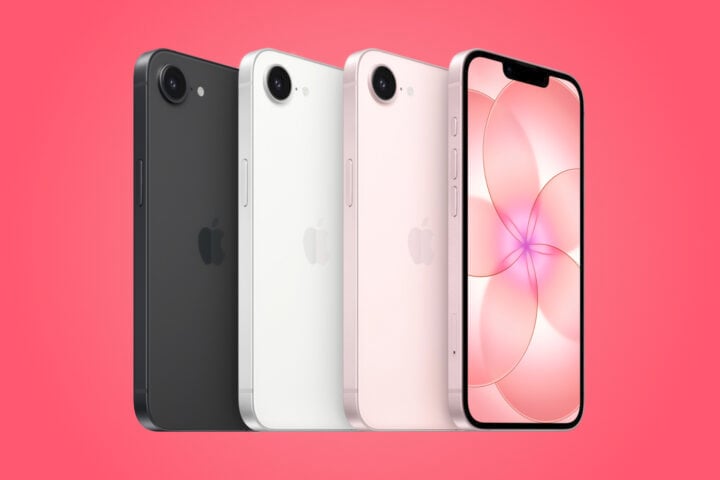
Starting the week was the official confirmation of Apple’s worst-kept secret: the iPhone 17e. The successor to last year’s iPhone 16e, Apple’s new cheapest phone retains the same $999 starting price.
Along with that same price is double the starting storage, now 256GB, and MagSafe technology. Magnetic wireless charging wasn’t included with the 16e, so it’s a welcome addition that makes the 17e compatible with more accessories, while increasing wireless charging speeds.
If you want the 512GB model, though, it costs an extra $400, which is a pretty big gulf. Elsewhere, the phone is largely the same, beyond faster internals. It looks similar to the 16e and still only has a single rear camera. Apple refers to this as a ‘Fusion Camera’, along with claims of 2x ‘optical-quality’ zoom. But it’s still one camera, albeit one that takes advantage of software and post-processing smarts.
Low-cost MacBook Neo is cheaper than an iPhone
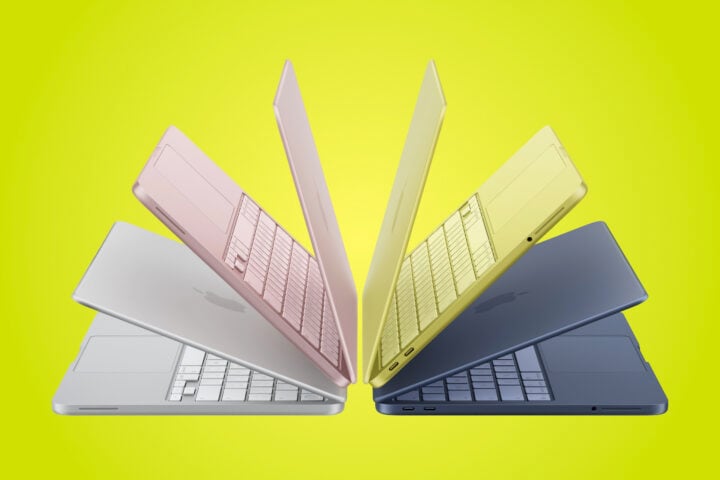
Even cheaper than the iPhone 17e is the MacBook Neo, Apple’s brand-new $899 laptop. Running on the A18 Pro chip found in the iPhone 16 Pro range, the 13-inch Neo also keeps costs down by sticking with 8GB of RAM and slower USB-C ports than other MacBooks.
It’s quite flashy compared to the sleek, muted tones of most Apple devices, with Blush and Citrus among the brighter colours. Apple clearly intends to take the fight to Chromebooks and cheaper Windows laptops, claiming the MacBook Neo outperforms similar PCs running on Intel’s Core Ultra 5 chipset.
iPad Air now has faster M4 chip, same design
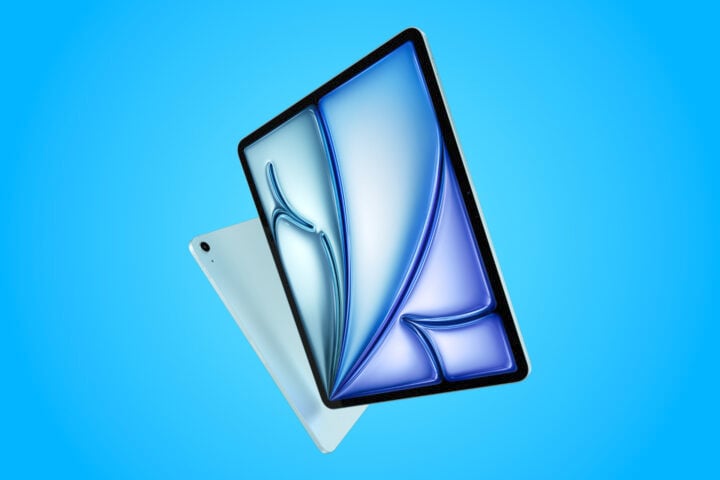
One of the more iterative upgrades of the week, the iPad Air is now available with Apple’s M4 system-on-a-chip. Externally, it’s indiscernible from the previous-gen iPad Air, including its colours.
But for those wanting faster performance from a tablet, without shelling out for an iPad Pro, there are some nice gains to be had. 2026’s iPad Air comes with 12GB of RAM, up from 8GB, which also benefits from faster memory bandwidth.
Improved networking and modem chips also mean better wireless connectivity, including Wi-Fi 7, Bluetooth 6, and Thread support. The latest iPad Air’s cellular modem is also more energy-efficient, so those relying on mobile data should get more battery life than previous tablets.
MacBook Air also gets more storage, but a $100 increase
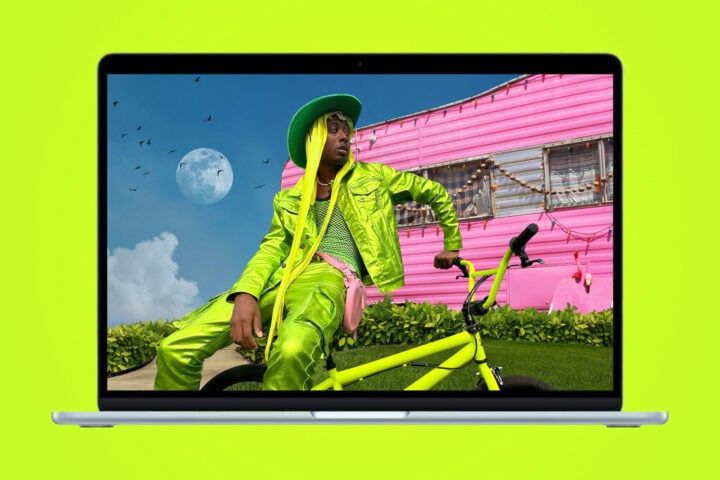
Like the iPhone 17e, the new MacBook Air — now with the M5 chipset — starts with double the onboard storage. 512GB is the default storage option, up from previous models’ 256GB. However, the starting price has also increased, now sitting at $1,799, up from $1,699.
Like many of Apple’s announcements this week, the new MacBook Air is functionally identical to its predecessors. Improvement largely stems from the faster chip and upgraded internals.
With an eye on the current AI boom, Apple claimed the M5 MacBook Air runs local AI models up to four times faster than last year’s M4 model. Like the iPad Air, the MacBook Air also benefits from Wi-Fi 7 and Bluetooth 6 connectivity, resulting from the included N1 networking chip.
Apple debuts Mini LED, HDR-compatible Studio Display XDR
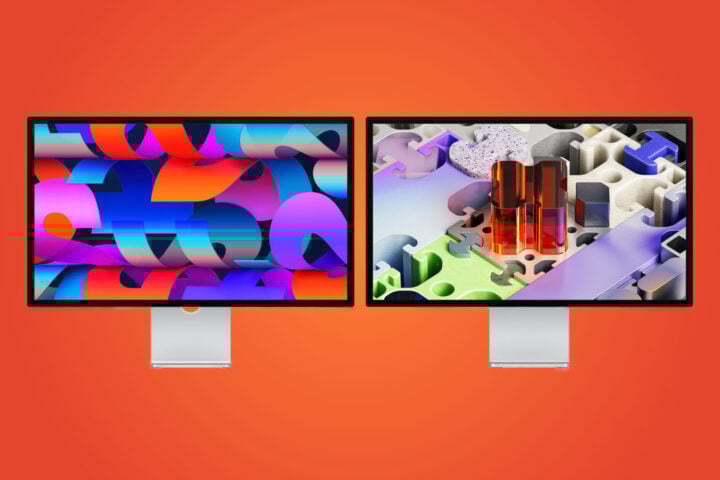
Several years after Apple’s last update to its Studio Display range of 27-inch professional monitors, there are now two distinct models to choose from. One is the standard Studio Display, costing $2,599, which now supports faster Thunderbolt 4 connectivity and a better speaker system, among other tweaks.
But the main addition is the new Studio Display XDR, a $5,499 premium screen that uses brighter Mini LED technology and supports HDR content. Suitability for professional creatives is Apple’s biggest selling point, with the Studio Display XDR covering more colour ranges, including the print and photography-based Adobe RGB, and more than 80 per cent of the Rec. 2020 range used in HDR filmmaking.
M5 Pro and M5 Max chips boost performance further
On the internal side of things, Apple announced the M5 Pro and M5 Max, its latest high-end Mac chipsets. As part of the announcement, Apple claimed the chips wield “the world’s fastest” CPU cores, which is quite the statement.
For end users, the main benefits are Thunderbolt 5 support, up to 30 per cent faster CPU performance, and 35 per cent better ray tracing performance from the GPU compared to the corresponding M4 chips.
A lot of those gains are because of Apple’s new “Fusion Architecture”, which connects two dies to one system-on-a-chip. Theoretically, it reduces latency and increases bandwidth across the chip, equating to better computing performance.
MacBook Pro is faster than ever, also pricier than ever
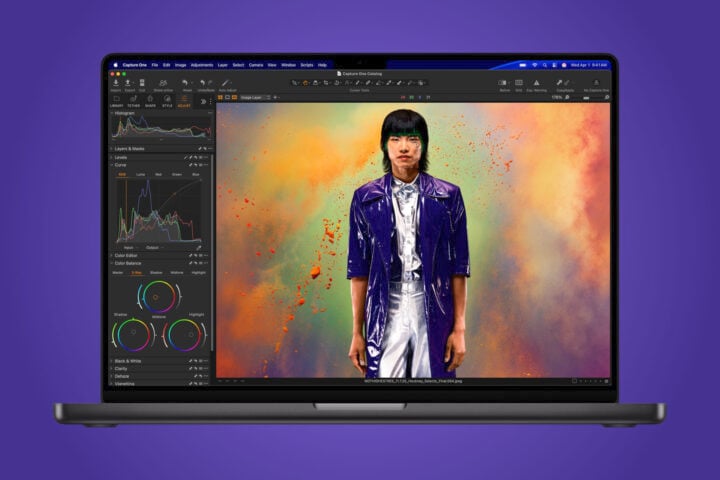
The first beneficiaries of Apple’s latest chips are the new MacBook Pro laptops. Unsurprisingly, they’re stated to be faster than ever, improving on the laptop range geared towards power users, like 3D modellers, VFX artists, and data scientists working with large models.
But, in one of the first signs that Apple is feeling the pinch of the global memory shortage, the MacBook Pros are noticeably more expensive than last year’s models. For the M5 Pro model, the starting price is $3,499, which is $200 pricier than the M4 Pro equivalent. It’s an even higher leap for the M5 Max; $5,799 is the starting price, a sizable $800 increase, equal to roughly 16 per cent.
The post Everything announced during Apple’s big Mac and iPhone week appeared first on GadgetGuy.
0 (mga) komento:
Mag-post ng isang Komento