


As someone who spends time at international press events, it’s fascinating watching how the cameras used there have changed. A few years ago, it was all ENG-style crews with shoulder-mounted rigs. Then came a wave of compact mirrorless setups. More recently, the DJI Osmo Pocket 3 became a near-ubiquitous sight at automotive launches and tech briefings. Now I’ve noticed something else is appearing alongside it: the Insta360.
Journalists and content creators are choosing 360 cameras as working tools at events, not just for capturing outdoor action. The question is: what’s driving that decision? And with the Insta360 X5, has the company made an 8K 360 camera good enough to justify a place in a serious content creator’s kit? I wanted to find out.
Table of contents
- What is a 360 camera, and why the X5 is different
- Specifications and price
- Using the Insta360 X5 for content creation
- The Essentials Bundle: what you get
- Shooting with the Insta360 X5
- Audio on the Insta360 X5
- Practical considerations
- Editing Insta360 X5 footage
- Who is the Insta360 X5 for?

What is a 360 camera, and why the X5 is different
360 cameras built their name in action sports. Strapped to motorcycle helmets, mountain bike handlebars, ski poles, or a backpack, they brought a first-person immersive perspective to footage that was simply not possible with conventional cameras. The ability to record in every direction simultaneously opened up angles that transformed what action content looked like, and gave those activities a new kind of audience on social platforms.
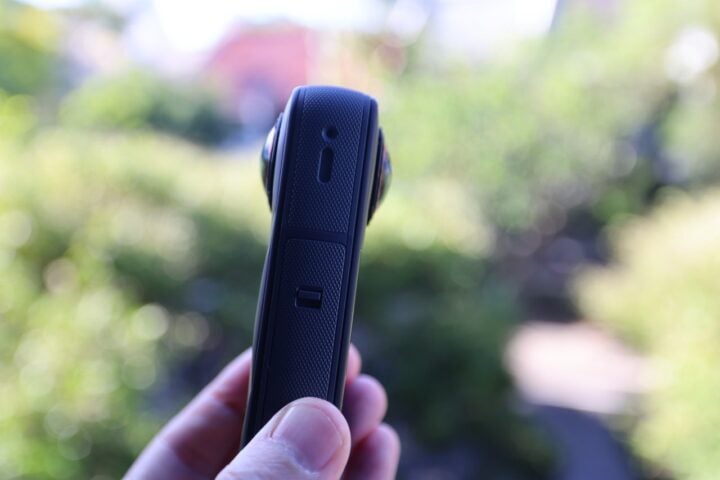
The early cameras were limited, though. Image quality was modest, battery life was short, and the editing workflow was awkward enough to limit broader adoption.
Moving forward to today, the image quality, battery life, and editing tools have matured, and the Insta360 X5 represents the current high point of that evolution. It uses two lenses: one facing forward, one facing back, each covering roughly 180 degrees. The two feeds are stitched together in-camera to produce a seamless equirectangular image that captures everything around you simultaneously. At 8K resolution, there is enough detail to reframe the footage significantly in post without visible quality loss.
The practical implication is a shift in how you approach filming, so, rather than deciding your framing before you shoot, you capture everything and decide what you want in the edit. For event coverage, interviews, vehicle walkarounds, and behind-the-scenes work, this opens up new possibilities.
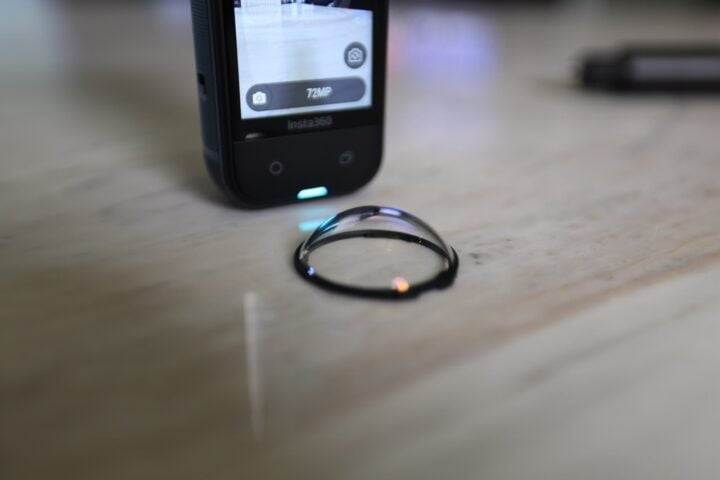
The X5 is Insta360’s current flagship, and it takes a big step up from the previous model. The most significant improvement is the sensor, which is now a dual 1/1.28-inch CMOS sensor, 144 per cent larger than those in the X4, with more detail and better performance in lower light. The lenses are now replaceable, a first for this series and a practical advantage for anyone who has ever cracked a lens dome on an action camera.
Insta360 X5 specifications and price
| Max video resolution (360°) | 8K 30fps (supersampled from 11K) |
| 5.7K modes | 5.7K 60fps | 5.7K+ 30fps |
| Reframe output | Up to 4K widescreen (16:9 / 9:16) |
| Codec | H.265 / H.264 |
| Colour profiles | Standard, Vivid, Flat (I-Log, 5.7K only) |
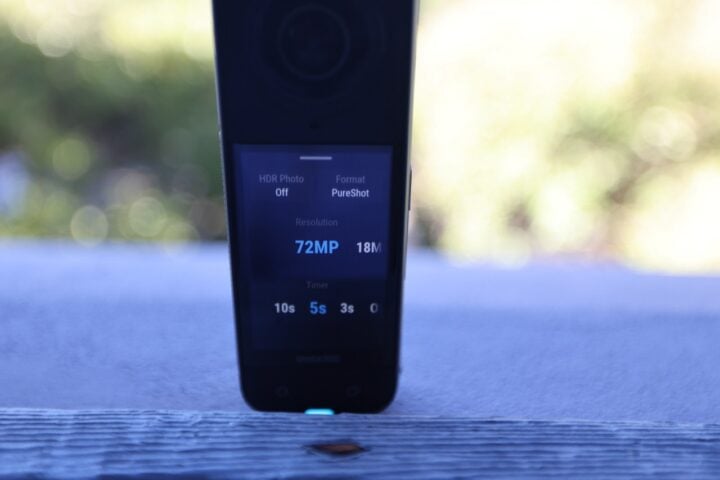
| Max photo resolution (360°) | 72MP |
| HDR | Supported |
| Sensor size | Dual 1/1.28″ CMOS (144% larger than X4) |
| Stabilisation | FlowState (6-axis gyroscope), Horizon Lock |
| Weight | 200g (7.06 oz) |
| Waterproofing | IP68, 15m / 49ft without housing |
| Lenses | Replaceable 170° fisheye; Wide Angle Mod available |
| Battery capacity | 2,400 mAh |
| Runtime (5.7K) | Up to 208 minutes |
| Runtime (8K 30fps) | Approx. 88 minutes |
| Fast charge | ~20 minutes to resume recording |
| Storage | microSD (up to 1TB) |
| Microphones | 4-channel spatial audio, built-in wind guard |
| Audio modes | 360° Spatial, Stereo, Voice Enhancement, Wind Noise Reduction (Auto) |
| External audio | Via X5 Mic Adapter (3.5mm / USB-C) |
| Bluetooth mic | Insta360 Mic Air: 7.9g wireless, 48kHz/24-bit, dual-track recording |
| Wireless | Bluetooth 5.0, Wi-Fi |
| USB | USB-C |
| App | Insta360 App (iOS / Android) |
| Editing software | Insta360 Studio (free desktop app) |
| Price (RRP) | $929.99 (Standard) | $1,109.99 (Essentials Bundle) |
| Official website | Insta360 Store Australia |
Using the Insta360 X5 for content creation
I primarily use the X5 for social videos that need to work in both 16:9 for YouTube and 9:16 for Instagram and TikTok. The ability to reframe a single 8K 360 clip into either orientation in post is very handy for anyone publishing across multiple platforms.
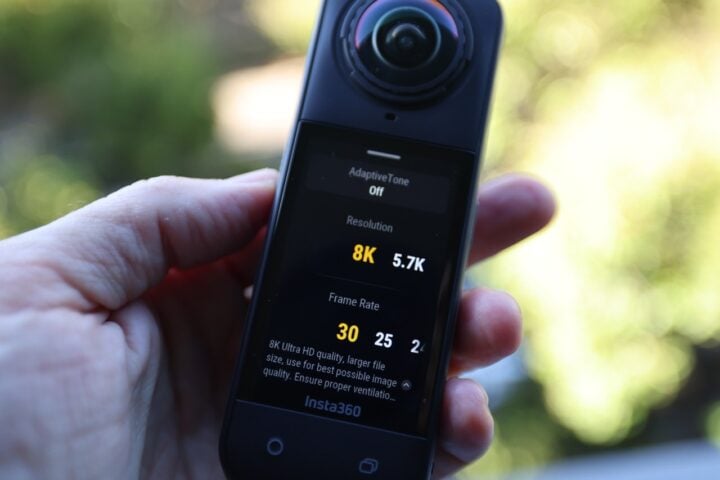
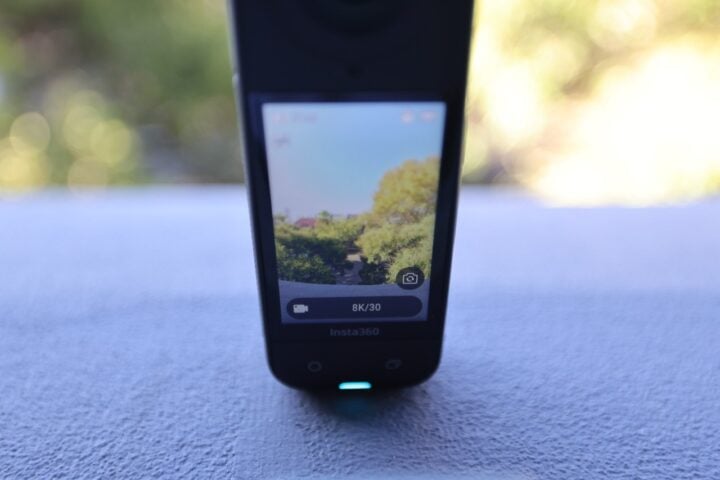
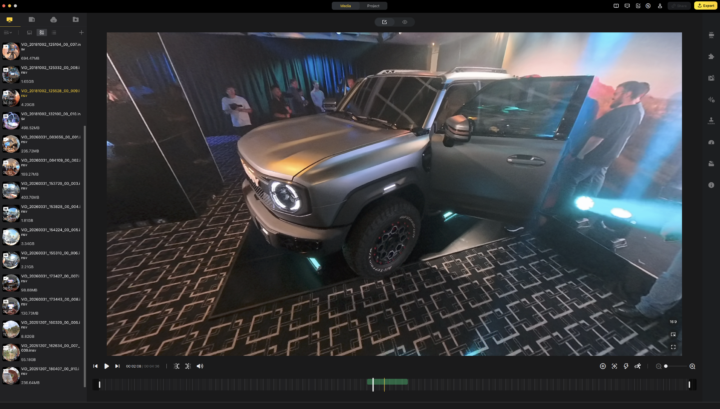
Apart from filming a range of outdoor activities, the camera also went with me to a recent car press launch, and this is a great example of an alternative use. At this event, I needed to film a few different things: inside and around a new vehicle, through the presentation space, into and out of interviews and maybe a bit of the on-stage presentation. Lastly, a bit of ‘behind the scenes’ footage couldn’t hurt.
To start with, the Insta360 X5 meant I could hold up the selfie stick, walk around the car, and know that I had every angle covered. It played a similar role to a compact camera on a gimbal. Next, I could capture the reveal as a wide shot, with some of the crowd’s reaction, and my own reaction simultaneously. For behind-the-scenes footage, I used FPV-style tracking shots as I moved through the hall, with wide establishing shots of the venue, all from one run.
The Essentials Bundle: what you get
I tested the Essentials Bundle, priced at $1,109.99 in Australia. Alongside the camera itself, the bundle includes an additional battery, the Utility Fast Charge Case (which charges the camera and a spare battery simultaneously, and has little cut-outs for storing MicroSD cards), a 114cm invisible selfie stick, standard lens guards, a protective rubber lens cap, and a carry case.
At $929.99 for the camera alone, the Essentials Bundle represents roughly $180 of additional value for practical accessories. The fast-charge case is worth paying extra for, as it lets you charge two batteries in parallel for less downtime between shoots. The spare battery also matters: at 88 minutes per charge in 8K 30fps mode, having a second cell ready is the difference between a half-day and a full-day camera.
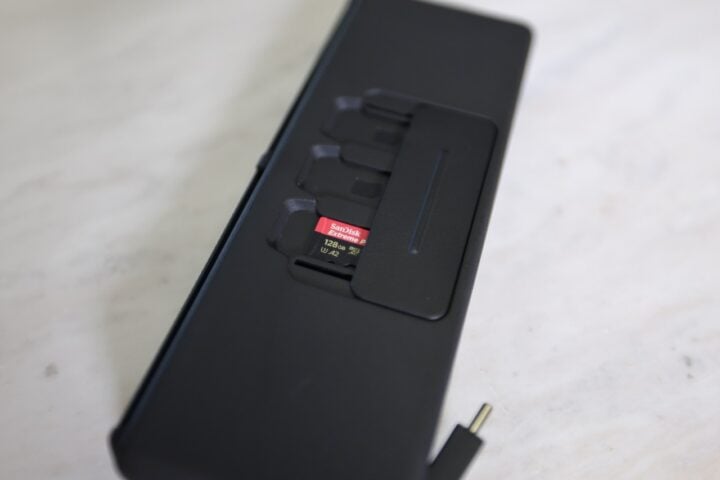
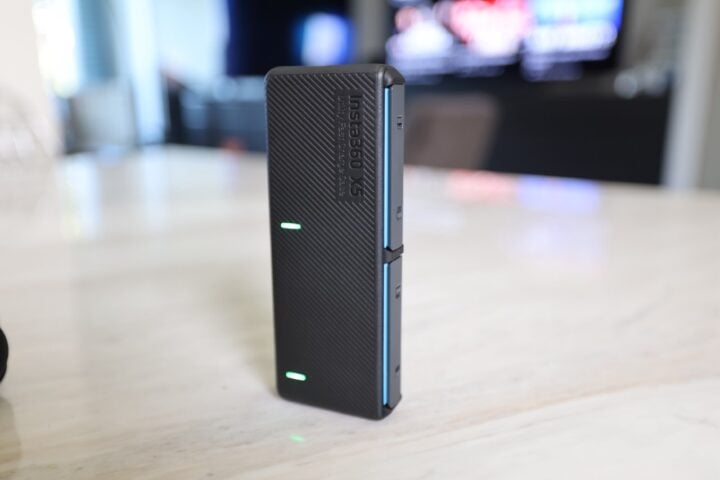
Beyond the Essentials Bundle, Insta360 offers a range of configurations, including cycling, diving, and creator-focused bundles, so it’s worth checking what suits your workflow before committing.
Shooting with the Insta360 X5
I really like how the Insta360 opens creative possibilities. Used well, you can produce footage that looks like it came from a crew of several operators. The invisible selfie stick effect, where the mount is automatically removed from the stitched image, is a handy trick, and the stick’s extendable length gets the camera into all sorts of places. And the selfie-stick removal happens automatically, making for clean floating-camera shots that look expensive and effortless.
That said, using a 360 camera effectively requires a shift in how you think about shooting. The twin 180-degree lenses see everything, which means the operator is always in frame. You can’t stand behind the camera. For walkarounds and selfie-style footage, this is fine. For traditional over-the-shoulder interview setups, you’ll need to get your head around it. To avoid recording myself, there’s a ‘single lens’ mode that only films from the outer 180-degree camera, so I used this.
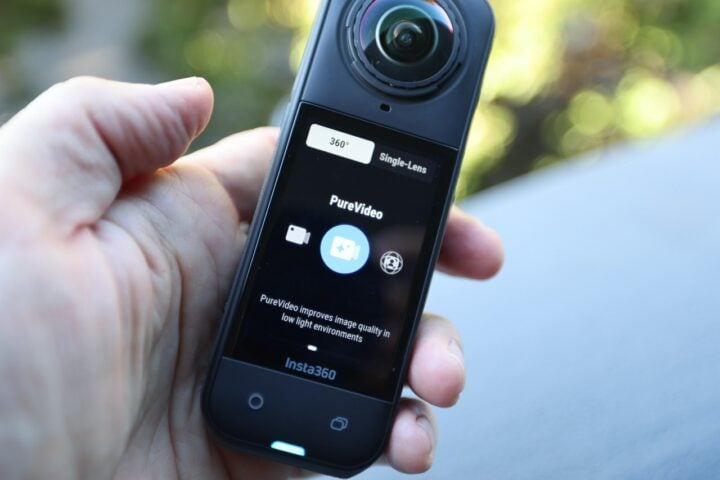
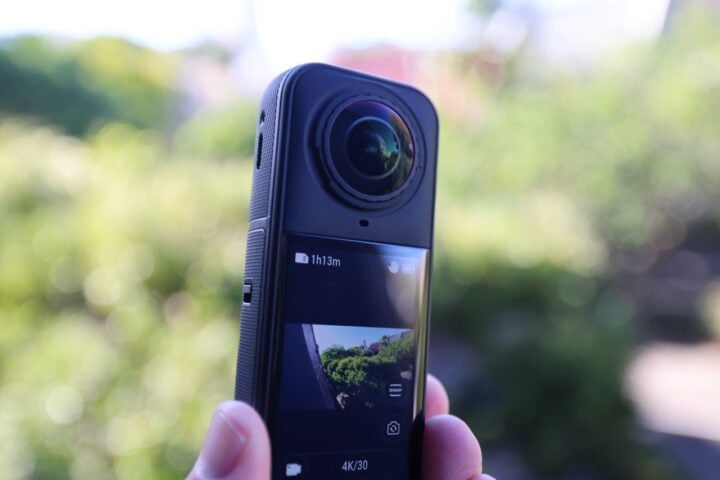
Footage quality in good light is excellent. The 1/1.28-inch sensors produce crisp, detailed 8K imagery that holds up well when reframed. In lower light conditions, quality degrades more noticeably. The X5 is better than the X4 in this regard, thanks to the larger sensors, but it is not a low-light specialist. Indoor event footage lit with stage lighting is workable; dimly lit corridors or evening exterior shots should be thought through a bit more.
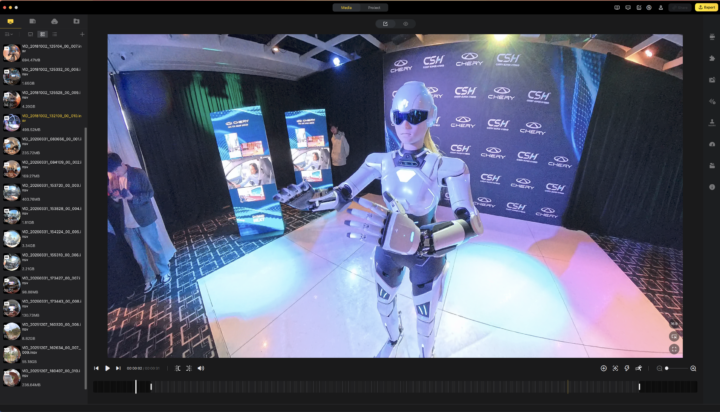
However, when filming darker scenes, the X5 suggests switching over to PureVideo mode, which raises the ISO and applies noise reduction for a cleaner image.
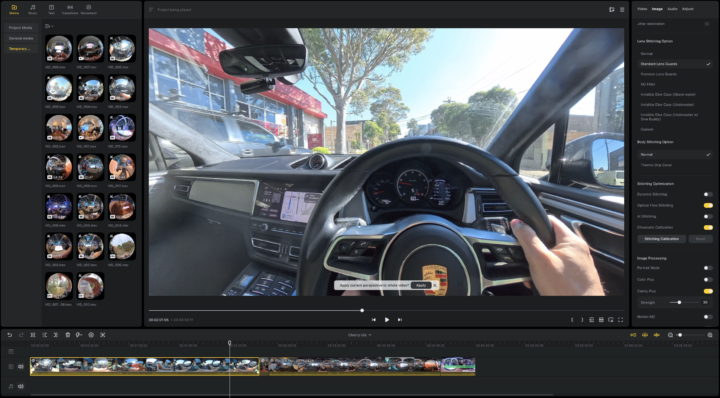
The FlowState stabilisation is impressive in motion. Walking quickly, turning, or moving through a crowd, the footage remains smooth and usable without any additional post-processing. Horizon Lock keeps your horizon level even in dynamic movement. I also tried brisk walking, running, driving and mountain biking with FlowState enabled, and the results were surprisingly smooth with no obvious artifacts or wobble effects.
Also worth noting about the lens optics is that the fisheye lens produces a distinctive wide-angle look. This can be corrected to a more natural rectilinear field of view in Insta360 Studio, and there are different modes to choose from that vary between ultra-wide and linear, but your best results will probably come in post-production.
Audio on the Insta360 X5
The X5 features a four-channel spatial audio system with a built-in steel mesh wind guard on the rear microphone. Four audio modes are available: 360-degree Spatial (which captures directional audio from all around for VR applications), Stereo, Voice Enhancement, and Auto Wind Noise Reduction in both strong and weak variants.
For professional content work, the built-in microphones are adequate for ambient capture and scratch audio, but any serious production should be supplemented with external recording. Insta360 offers a Mic Adapter (3.5mm and USB-C) for wired external mics.
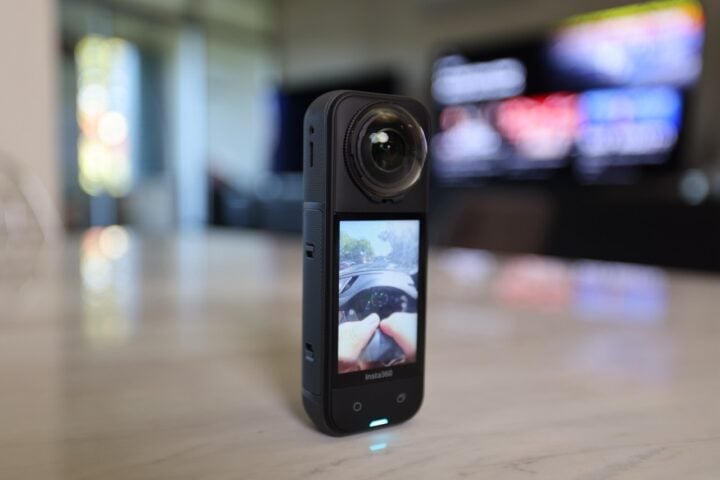
More interesting is the Insta360 Mic Air, a wireless Bluetooth lapel microphone launched alongside the X5. At 7.9g, it is barely noticeable on a subject, connects directly to the X5 via Bluetooth, and records at 48kHz/24-bit with built-in noise reduction. The X5 supports dual-track audio recording where the camera simultaneously captures its own built-in microphone and the Mic Air feed as separate channels, giving you flexibility in post. For solo operators who need clean interview audio without a separate recorder, this is the answer.
Practical considerations
At 200g, the X5 is compact and light. It disappears into a bag, sits comfortably on the selfie stick for extended shooting, and attracts minimal attention at events, which can be an asset in environments where a large camera rig would draw unwanted interest.
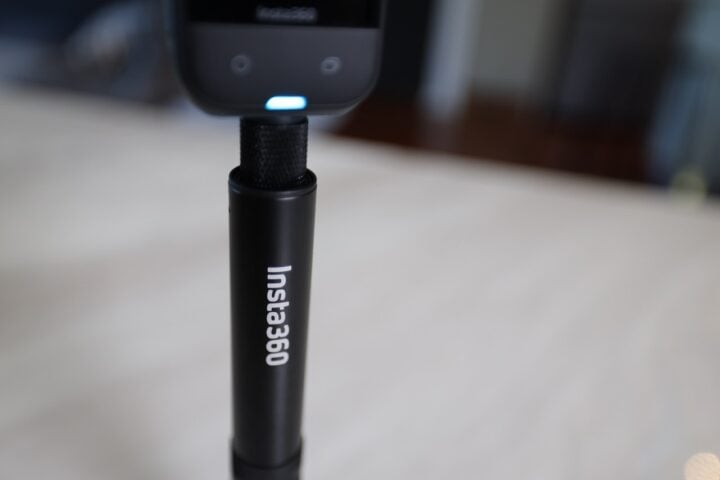
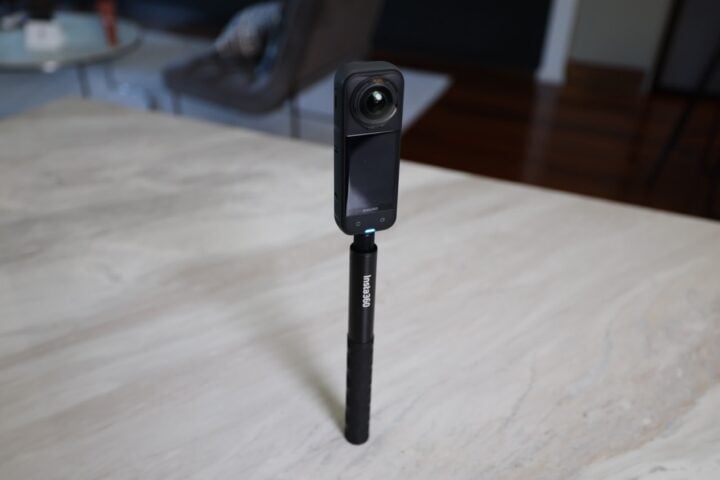
The IP68 waterproofing to 15m without any housing is a significant improvement over the X4’s 10m rating. For most working conditions (rain, splashes, brief submersion), this means the camera simply doesn’t need additional protection. It’s a more capable outdoor tool than it looks. And of course, this all comes in very handy if you’re out enjoying nature, on the ski slope, beach, hitting the trails or asphalt. Thankfully, if you’re wearing gloves or otherwise have your hands occupied, you can start the recording with your voice or a hand gesture.
Battery management is an important part of using the X5 on a full shooting day. The 208-minute rating in 5.7K mode is generous, but shooting at 8K 30fps brings that down to around 88 minutes, or even less depending on visual enhancements that you might have enabled. The fast-charge capability (approximately 20 minutes to resume shooting) mitigates this considerably. With a spare battery and the fast-charge case, a full event day is manageable without much stress.
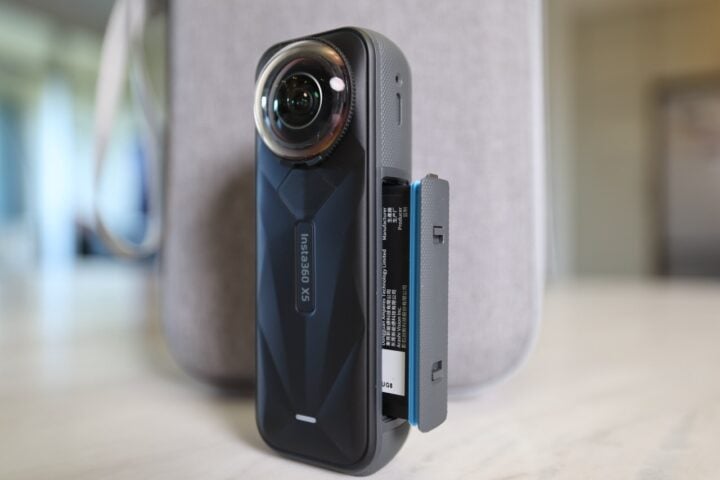
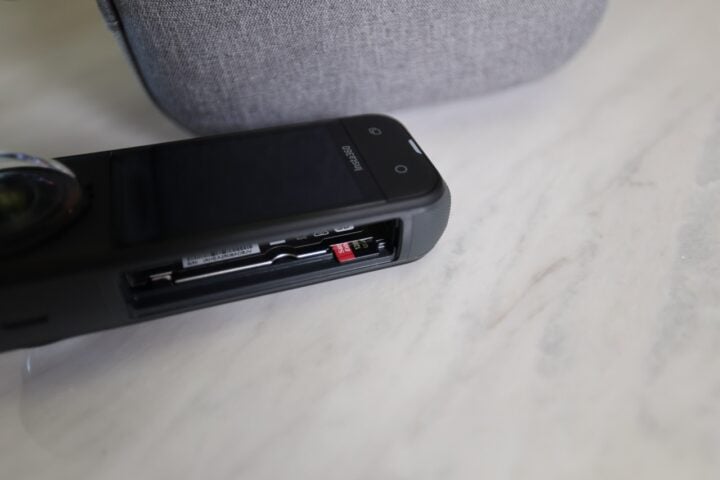
Storage is via microSD, with support for cards up to 1TB. The camera records in H.265 (HEVC), which produces smaller file sizes for the resolution but requires decent hardware or software for smooth playback and editing. I-Log, Insta360’s flat colour profile for grading headroom, is available in 5.7K mode. It is not available in 8K, which is a limitation for those wanting maximum flexibility in colour work at full resolution. There is no 10-bit option in any mode, so there’s only so far you can push things during grading or when matching other cameras.
Editing Insta360 X5 footage
Editing 360 footage is quite different from conventional video. Before you can work in a standard non-linear editing (NLE) program like DaVinci Resolve or Adobe Premiere, you first need to use Insta360 Studio, the company’s free desktop software, to reframe your clips. In Studio, you select your output framing: moving the virtual camera around the 360 sphere to find the angles you want, setting keyframes for camera movement, and exporting standard video files.
Insta360 Studio also supports automated subject tracking, which can lock to a person or object in frame and follow them through a clip automatically. In my experience, the tracking works reasonably well, though for more demanding or precise editorial work, manual keyframing gives you more control.
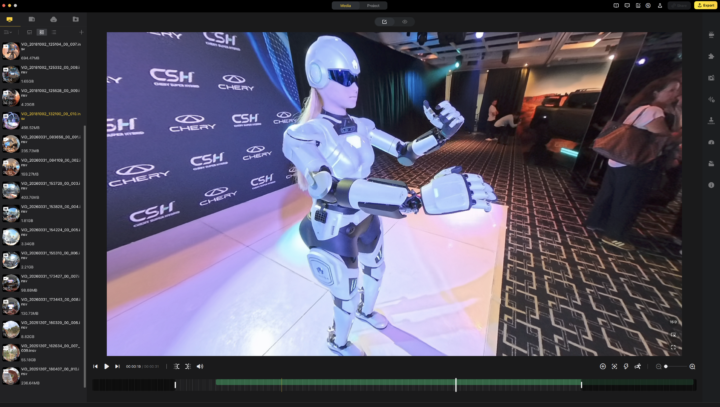
Once clips are exported from Studio, they can be brought into DaVinci Resolve for colour grading, audio work, and cut in the normal way. There is currently no direct native workflow from INSV files into Davinci Resolve, though this appears to be on Insta360’s roadmap, but this has been a long time coming. Adobe Premiere, however, does have an Insta360 plug-in for a more direct workflow.
Insta360 Studio is competent rather than exceptional. It does what it needs to do, though those accustomed to the refinement of professional NLEs will find it basic. I’d rather not have to learn a new editing tool and just do the work in my editing suite. However, with practice, the reframing tools are perfectly functional.
Who is the Insta360 X5 for?
The Insta360 X5 is a great addition to any content creator’s kit, particularly for those who work across events, press situations, and social platforms where versatility and speed matter more than traditional cinematic control.
And as an action camera, it is a fantastic way to introduce new, creative dimensions into your videos, and has evolved into a very feature-rich system in its own right.
Regardless of which way you go, what it offers that few camera types can match is the freedom to capture everything and decide what you want in the edit. The footage quality at 8K, with substantially improved sensors over the previous generation, is good enough to hold up at professional output resolutions, although the final resolution is often reduced once tracking and stabilisation are applied.
The limitations are manageable, too. The editing workflow is more involved than conventional footage. The fisheye look doesn’t suit everything, but at least there are different wide-angle modes. I-Log is restricted to 5.7K. For those wanting cinema-quality grading, this is not that camera.
But for content creators operating across social and editorial channels, covering events, or building flexible libraries of footage that can serve multiple platforms and formats, the Insta360 X5 is the most capable and practical 360 camera that I’ve seen. It represents a real evolution over the X4, and at $929.99 for the Standard Bundle, or $1,109.99 for the Essentials Bundle with the accessories, you can really put it to work.
It’s also clear that 360 cameras are becoming the new normal in content capture, and the Insta360 X5 is the reason why.
GadgetGuy occasionally uses affiliate links and may receive a small commission from purchased products.
The post Insta360 X5 review: Shoot everything, decide later. It’s brilliant. appeared first on GadgetGuy.
0 (mga) komento:
Mag-post ng isang Komento