


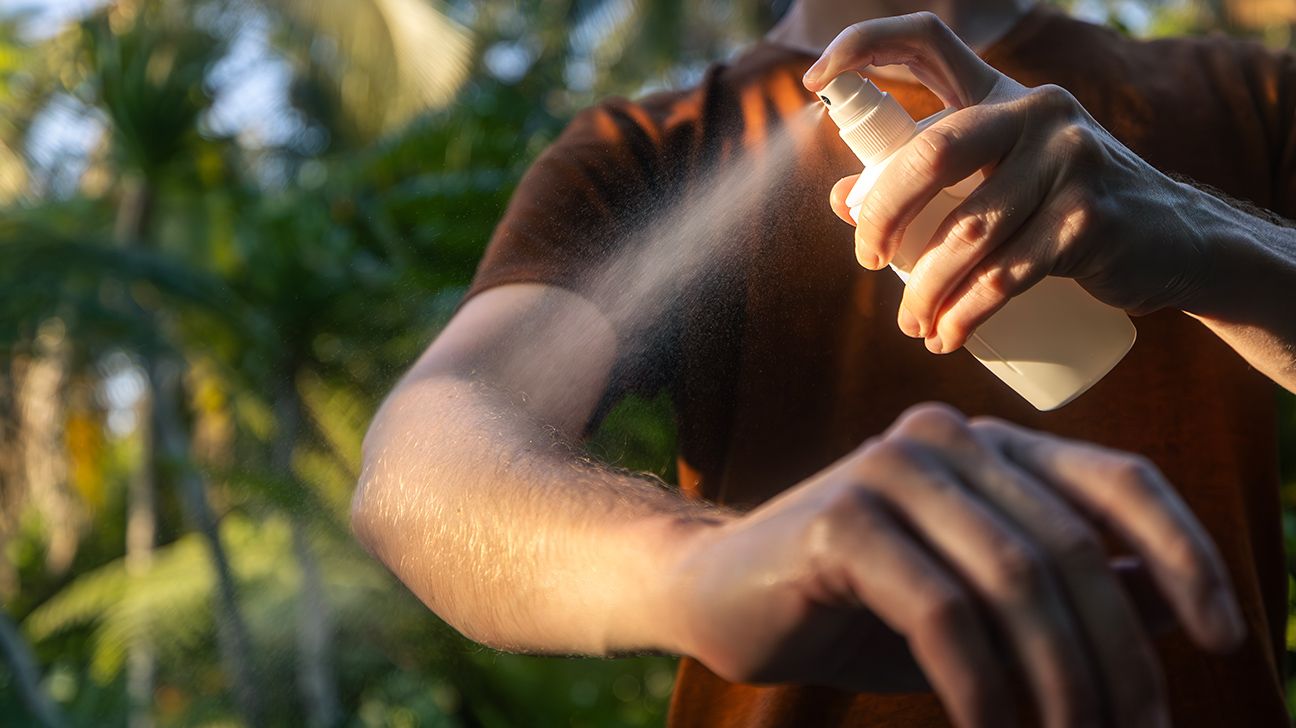
- Researchers have identified several reasons why mosquitoes are more attracted to some people than others.
- The scent you give off through carbon dioxide and through your skin can make you more prone to mosquito bites.
- Mosquitoes may also be more attracted to people who drink beer.
- While DEET offers protection, research suggests that mosquitoes could evolve to become attracted to it.
If you’ve ever felt like you’re a mosquito magnet, you’re not alone. Research shows that mosquitoes may be more attracted to some people than others.
A 2026 preprint study found that mosquitoes are also more attracted to those who drink beer compared to those who don’t.
Other recent studies have found that mosquitoes are attracted to the carbon dioxide (CO2) humans exhale. Older studies suggest that mosquitoes may be attracted to chemical odors emitted by your skin.
Regardless of what attracts them, it’s safe to say that no one wants to be their next meal.
“Mosquitoes are said to be the most dangerous animals on our planet because they can transmit serious infections, including malaria, yellow fever, Zika, dengue, and chikungunya, among others,” said William Schaffner, MD, professor of infectious diseases at Vanderbilt University. Schaffner wasn’t involved in the studies.
“Thus, learning how to avoid mosquito bites has long been a public health priority. It is a common experience that mosquitoes seem to have a preference for some persons while avoiding others,” he told Healthline.
DEET has long been considered the gold standard repellent for protection against mosquito bites. However, a new study found that mosquitoes may have learned how to associate DEET with food and even become attracted to it.
Of course, this doesn’t mean you should stop using DEET altogether. Any protection against mosquitoes is better than none at all.
Whether you plan to travel this summer or attend World Cup matches, you may need to take extra precautions against mosquitoes, especially if you’re more prone to bites than others. Here’s what you need to know.
Why are some people tastier to mosquitoes than others?
Mosquitoes are attracted to the CO2 we exhale. They can fly up a CO2 “plume” that a person creates when they breathe and find a host. However, whether they land or not may depend on other factors.
Some studies have pointed to our unique heat signatures as a reason mosquitoes may choose to land and feed on some people rather than others. Mosquitoes may be more attracted to stronger heat signatures.
Other studies have found that mosquitoes may be attracted to chemical odors emitted by human skin. People who are more attractive to mosquitoes appear to produce more carboxylic acids. Carboxylic acids are naturally occurring compounds. They are found in human sweat and generated by skin microbes.
Researchers believe that understanding how mosquitoes are attracted to certain skin odors may help develop more effective repellents.
A recent study at a festival also found that what you drink may be more likely to attract mosquitoes. The researchers examined mosquito behavior among 465 participants from the festival.
They found that factors such as consuming beer appeared to attract mosquitoes more.
The researchers noted that this may be due to the smell of beer attracting mosquitoes rather than blood alcohol levels. However, they also note that further research is needed to verify the findings.
“This study, conducted during a music festival in the Netherlands, suggested that mosquitoes were attracted to the skin of persons who had consumed beer,” Schaffner said.
“However interesting, the result is inconclusive and must be confirmed by further research. It is unlikely that this study will result in a notable reduction in beer consumption.”
DEET: It’s what’s for dinner
A recent study published in the Journal of Experimental Biology found that mosquitoes may begin to associate the smell of DEET with food and even become attracted to it.
The researchers trained mosquitoes by gradually introducing DEET and using a bag of warm blood kept just out of reach. As the mosquitoes began feeding on blood, the team introduced DEET into their environment.
After repeating this process 4 times, they found that more than 60% of the mosquitoes attempted to feed when presented only with the smell of DEET. The insects were then given a choice of human hands. The “untrained” mosquitoes avoided the DEET-covered hand, while the “trained” ones were drawn to it.
“The common assumption has always been that repellents work because of their chemistry — that DEET simply smells bad to mosquitoes and they flee or that its chemistry prevents mosquitoes from smelling us,” Clément Vinauger, associate professor of biochemistry at Virginia Tech, and co-author of the study, said in a press release.
“But what we are showing is that the mosquito’s brain can rewrite that response based on experience. What the insect has learned matters just as much as what the chemical does. That, I think, is a paradigm shift,” Vinauger continued.
Schaffner noted that while these findings are interesting, they are “unlikely to occur in nature.”
The researchers noted that these findings don’t mean you should stop using DEET, as it’s still one of the most effective ways to repel mosquitoes.
The study, however, suggests that the timing and concentration may matter more than previously thought.
Vinauger suggested reapplying regularly rather than a lot at once. This may help the repellent to remain continuously active and provide protection.
Best protection against mosquitos
If you’re spending time outdoors, it’s important to try to protect yourself from mosquito bites.
“Mosquito bites are an unpleasant nuisance, but, beyond that, mosquitoes can be the vectors for numerous diseases. Avoiding mosquito bites also reduces your risk of being stuck with a nasty infection,” said Schaffner.
Schaffner recommended the following ways to help protect yourself from mosquito bites:
- wear long-sleeved shirts and blouses
- wear light-colored clothing
- be aware that early mornings and evenings are times when many mosquitoes bite
- check the environment around your house to get rid of objects with standing water (i.e., plastic toys) as they can be breeding grounds for mosquitoes
If you are looking for alternatives to DEET, you could also try natural mosquito repellents.
Beer, Body Scent May Make You a Mosquito Magnet. Can DEET Help?
Source: Pinoy Lang Sakalam
0 (mga) komento:
Mag-post ng isang Komento