


- 18 American passengers have been airlifted to the U.S. after a deadly hantavirus outbreak aboard an Antarctic expedition cruise ship.
- Investigators believe the rare Andes virus strain may have spread among passengers in the ship’s close quarters.
- Experts say the outbreak highlights the seriousness of hantavirus, but stress that the risk of a COVID-like pandemic remains low.
Health officials say that 18 Americans have returned safely to the United States after traveling on a cruise ship in the Atlantic linked to a deadly hantavirus outbreak.
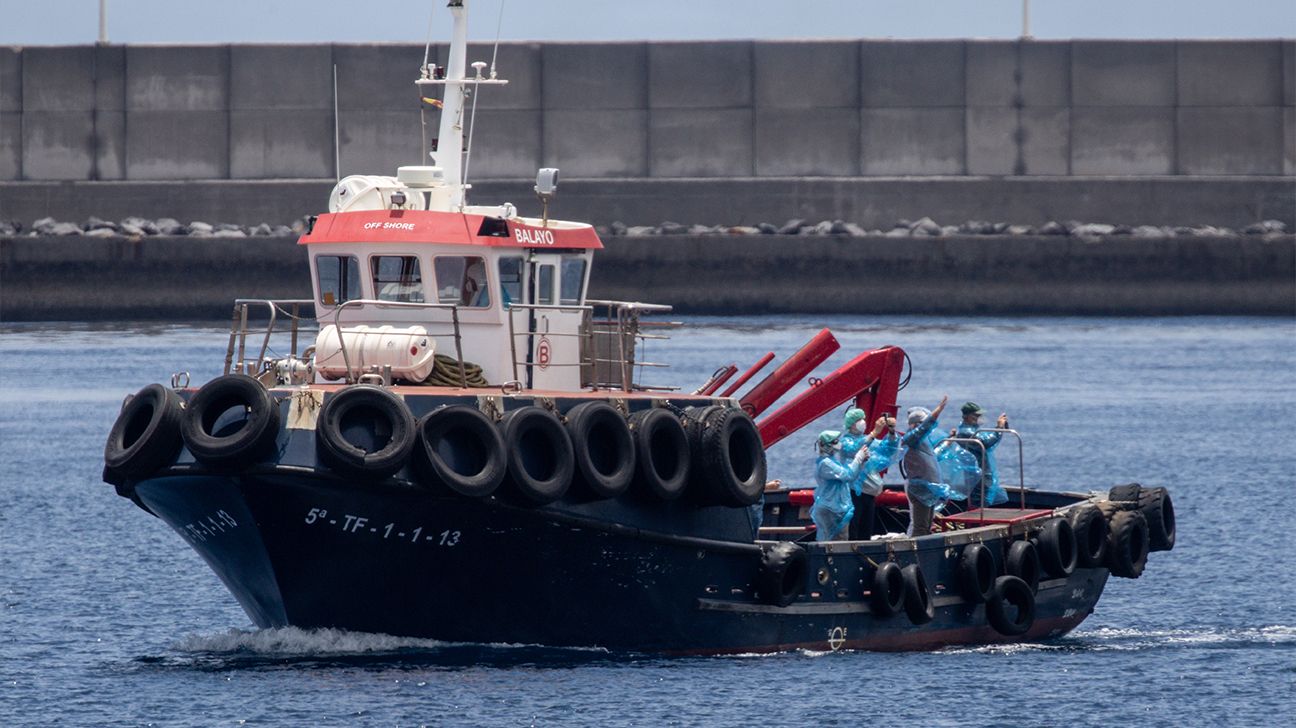
The U.S. State Department airlifted the passengers from the Spanish island of Tenerife on May 10. Two of those passengers are being treated in biocontainment units “out of an abundance of caution,” according to the Health and Human Services X account. One passenger tested positive for hantavirus, while the other developed mild symptoms, officials said.
Of the repatriated Americans, 16 are being treated at an ASPR Regional Emerging Special Pathogen Treatment Center in Omaha, NE. Two others are being treated at a RESPTC in Atlanta, GA. The Americans are among dozens of passengers monitored as international health officials continue investigating the outbreak aboard the ship.
The Dutch-flagged m/v Hondius departed from southern Argentina on April 1 with roughly 150 passengers and crew aboard for an expedition cruise through the Atlantic Ocean. Just 11 days into the voyage, a 70-year-old man died after developing fever, headaches, and abdominal pain.
After several additional passengers became ill, the World Health Organization (WHO) identified the ship as the site of a hantavirus outbreak.
As of May 12, the number of confirmed hantavirus cases linked to the ship rose to 11, according to the WHO. Three deaths have also been confirmed: a Dutch married couple and a German national.
All remaining passengers have disembarked and are being repatriated to their home countries, according to the latest statement from Oceanwide Expeditions, the ship’s operator.
However, the repatriation effort appeared to cause alarm and fuel fears of another pandemic — concerns that experts say are overstated.
“I think we’re actually in very good shape,” said Lina Moses, PhD, an epidemiologist and disease ecologist at Tulane University’s Celia Scott Weatherhead School of Public Health & Tropical Medicine, who specializes in rodent-borne diseases.
“It’s not surprising we’re starting to see more suspected cases. That means that the process is working right. They are monitoring people effectively and identifying people as they become ill,” Moses told Healthline.
Concerns over human-to-human transmission
Pandemic fears have largely been driven by what is believed to be human-to-human transmission of hantavirus aboard the Hondius, a rare but documented phenomenon.
Hantavirus is typically transmitted through exposure to the urine or droppings of infected mice and rats. The virus can survive in dust and debris, and when that dust is inhaled, infection can occur.
However, one strain of hantavirus endemic to South America, the Andes virus, has been linked to cases of human-to-human transmission. It is the only hantavirus known to spread from person to person.
The leading theory on the outbreak aboard the Hondius is that an individual carrying the Andes virus boarded the ship and subsequently passed it on to other passengers.
Experts say that the level of transmission aboard the ship is reasonable given the circumstances and does not indicate anything out of the ordinary.
“Previously, we’ve seen person-to-person spread with Andes virus in situations such as close household contacts or at a large social gathering. There’s nothing here that is remarkably different from what we’ve seen in the past,” said Steven Bradfute, PhD, an associate professor at the University of New Mexico Health Sciences Center who specializes in hantavirus research.
Researchers have documented this transmission in Argentina, including “super spreader” events that resulted in numerous infections at once. Cruise ships can be the perfect environment for disease outbreaks, such as norovirus, which have been documented regularly.
“The most plausible explanation is that the passengers of the cruise ship likely became infected before boarding the cruise, then human-to-human transmission occurred among close contacts,” said Robert Glatter, MD, attending physician in the Department of Emergency Medicine at Lenox Hill Hospital in New York City, and assistant professor of Emergency Medicine at Zucker School of Medicine at Hofstra/ Northwell.
“The confined ship environment with close quarters and shared spaces likely facilitated transmission between passengers in ways that wouldn’t occur in typical community settings,” he told Healthline.
Why hantavirus isn’t the next coronavirus
Not all viruses are created equal. Some are capable of surviving for extended periods of time outside the body, and some die almost immediately.
One virus could be easily transmitted through the air, while another could require prolonged close contact with an infected person.
In the case of the Andes virus, experts say it simply does not have the same transmission potential as a virus like the coronavirus, which causes COVID-19.
“We do have the advantage of historical comparison and what we’re seeing is that Andes virus transmission is much less efficient than what we were seeing in the early stages of COVID,” Moses said.
While experts don’t necessarily understand the exact mechanisms by which the Andes virus spreads from person to person, unlike other hantaviruses, they are confident in their assessment of its relatively low transmissibility.
“When you compare it to what we see with SARS-CoV-2, the common cold, or influenza, it’s not even in the same ballpark. That doesn’t mean we are dismissing it; these are dangerous viruses, but the transmissibility is not in the same ballpark,” Bradfute told Healthline.
Another complicating factor is the disease’s incubation period—the time between infection and the onset of symptoms — which can range from 4 to 42 days.
That long incubation period has stoked fears that individuals who are asymptomatic may be able to transmit the virus without even being aware they have it, which was common during the COVID-19 pandemic.
But that too is unlikely for Andes virus, experts say.
“The viral load appears highest during the early symptomatic period when patients experience fever and respiratory symptoms. This pattern means that severely ill patients — those most likely to transmit the virus — are also most likely to be hospitalized and isolated, naturally limiting transmission opportunities,” Glatter said.
Everything we know so far points to the following: The Andes virus can lead to serious and potentially fatal outcomes in humans, but it is rarely transmitted from one person to another. Person-to-person transmission requires extended intimate contact with an infected individual.
Therefore, the risk of a new global pandemic and threat to the public at large remains low.
“I’m not changing any of my travel plans,” Bradfute said. “These viruses are dangerous. They’re to be taken seriously. But from what we know of this virus and what we’re seeing so far, there’s nothing here that is concerning for a pandemic at this point.”
Hantavirus-Exposed Americans Return to U.S. — Why Experts Say Your Risk Is Low
Source: Pinoy Lang Sakalam
0 (mga) komento:
Mag-post ng isang Komento