


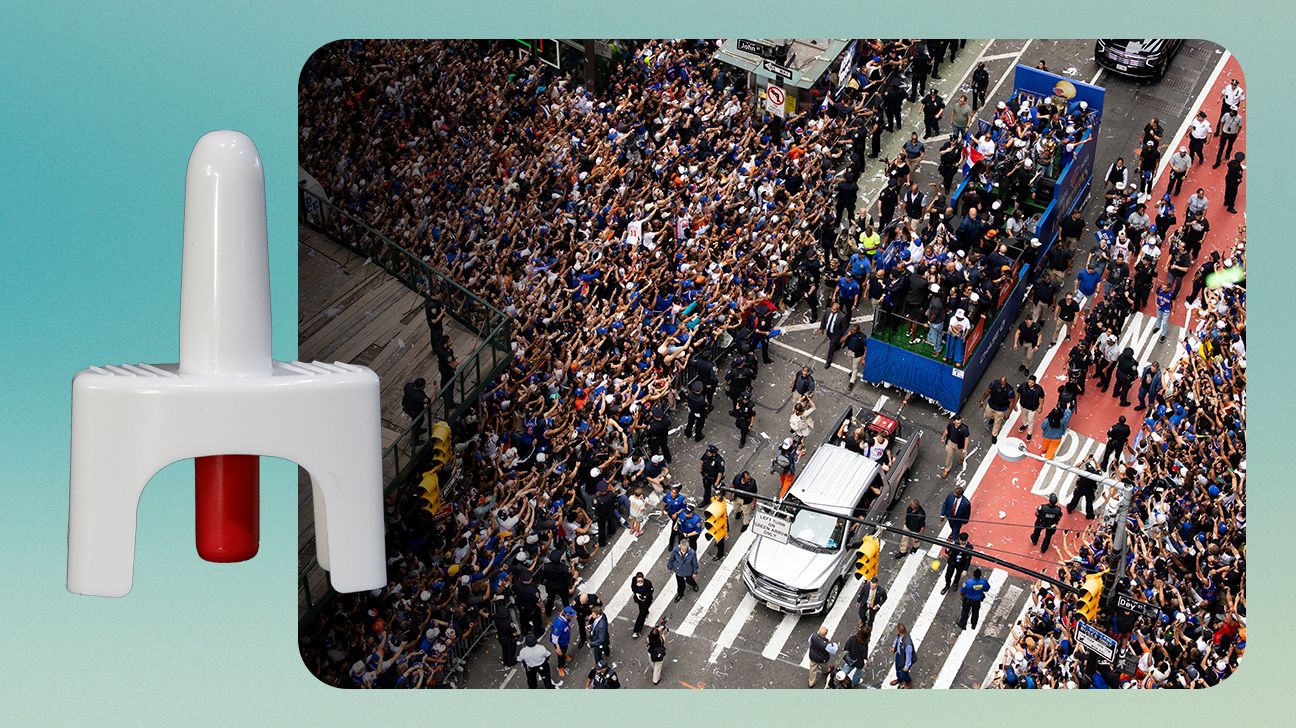
- An off-duty EMT saved a man’s life with Narcan during an apparent overdose at the NY Knicks championship parade.
- The incident highlights the need for quick action with a naloxone medication during an opioid emergency.
- The FDA recently approved another OTC naloxone, further broadening access to this lifesaving medication.
The New York Knicks championship parade drew an estimated 2 million fans to Lower Manhattan on June 18 in celebration of the team’s first NBA title in 53 years.
While the gathering was largely festive, it was not without incident.
Simone Kelly, 24, a volunteer emergency medical technician, was off-duty when she and another anonymous first responder used Narcan to revive a man who had apparently overdosed, according to the New York Post, which was first on the scene.
The heroic act amidst a throng of bystanders quickly went viral, highlighting the need for a fast response to opioid overdoses with naloxone-based medications.
Kelly said that “anyone can learn” how to step in during an opioid emergency. Here’s what you need to know about naloxone, and why it’s more accessible than ever.
FDA broadens access to naloxone
Narcan, an over-the-counter nasal spray, was approved by the Food and Drug Administration in 2023 to rapidly reverse opioid overdoses.
On June 16, the FDA further expanded access to this lifesaving medication with another intranasal naloxone product, Rextovy, to help reduce opioid-related deaths in the United States.
The FDA states that while overdose deaths have dropped dramatically since Narcan’s approval, the problem, largely driven by synthetic opioids like fentanyl, persists.
“Reducing opioid overdose deaths is a top priority for FDA,” Mike Davis, MD, PhD, Acting Director of the Center for Drug Evaluation and Research (CDER), said in a statement. “Empowering people without medical training to take immediate action with these products has been proven to save lives.”
Rextovy, is now available for purchase without a prescription at pharmacies, stores, and online.
“This is significant because it means anyone can walk into a pharmacy and get a medication that can save their own or someone else’s life from an opioid overdose, no prescription needed,” said Joseph Volpicelli, MD, PhD, Executive Director of the Institute of Addiction Medicine, Emeritus Associate Professor of Psychiatry at the University of Pennsylvania, and senior advisor at Oar Health.
“In the U.S., where opioids are [a] leading cause of injury-related death for people under 45, this expansion removes major barriers to addiction medication access, which I hope will set the precedent for similar drugs like naltrexone,” he told Healthline.
Fentanyl crisis spotlights need for fast response
Overdose deaths from synthetic opioids like fentanyl account for upward of 92% of all fatal opioid overdoses.
Synthetic, illicitly made opioids have become so potent that naloxone may not be enough to undo the harm of an overdose. Worse, fentanyl is now mixed into many different types of drugs, often without the user’s knowledge.
A recent study published in Anesthesiology found that naloxone may not fully reverse respiratory depression caused by a synthetic opioid overdose, further highlighting the need for fast intervention.
“Our study shows that the current doses of naloxone may not be sufficient to reverse overdoses caused by newer synthetic opioids,” study lead author Maarten A. van Lemmen, PhD, of the Department of Anesthesiology and Anesthesia and Pain Research Unit at Leiden University Medical Center in Leiden, the Netherlands, said in a statement.
“We hope these findings encourage institutions to update guidelines and reinforce the importance of fast emergency intervention.”
An accompanying editorial explains that when someone who’s overdosed gets naloxone, they may wake up and seem alert, even before their breathing has returned to normal. Their breathing could still be slow even though they’re responsive, which does not indicate they’ve recovered.
“Many overdose victims become unconscious or marginally conscious with very slow breathing that is enough to deliver oxygen to the brain without causing brain injury or death,” said James P. Rathmell, MD, Anesthesiology editor-in-chief and author of the editorial, and professor of anesthesia at Harvard Medical School.
“Narcan could be given almost any time, [and] the person would regain consciousness without harm. On the other hand, if the overdose is extreme or if the individual has no tolerance, breathing may stop immediately as soon as the drug has reached the brain, seconds after injection. In that case, the Narcan would need to be given within just a few minutes to restore breathing without the danger of brain injury or death,” Rathmell told Healthline.
Because naloxone is less effective against stronger synthetic opioids, it’s crucial to call 911 at the first sign of an overdose and be prepared to administer additional doses as needed until medical help arrives.
Signs of opioid overdose
Learn how to recognize and reduce opioid and drug-related mortality at the American Society of Anesthesiologists’ REVIVEme page.
Common signs of opioid overdose may include:
- small or constricted pupils
- slowed or absent breathing
- extreme fatigue
- changes in heart rate
- loss of alertness
If you suspect someone is experiencing an opioid overdose, call 911 immediately.
What to know about naloxone for opioid overdose
Over the past two-and-a-half decades, naloxone has emerged in the United States as a lifesaving intervention for opioid overdose.
The drug was first approved in 1971 as an injection that was mostly used by medical professionals.
“It’s taken decades for more user-friendly forms, like a nasal spray, to come into the fold. That gap is largely the result of strict FDA safety requirements for over-the-counter use,” said Volpicelli.
“Today, these easier-to-use options are helping make it more accessible outside of clinical settings. For most real-world situations, the nasal spray works just as well and is a good alternative to the injection. Similarly, if a bystander or family member is in a crisis moment, the nasal spray is practical and also far less intimidating, which could be the difference between life or death,” he said.
Naloxone works specifically to treat opioid overdoses, such as those attributed to:
- heroin
- fentanyl
- oxycodone
- hydrocodone
- certain prescription pain medications
The medication blocks opioid receptors in the brain and, if used correctly and quickly, may reverse an overdose within minutes. However, naloxone is not effective against alcohol, benzodiazepines, or stimulants like cocaine, Volpicelli explained.
Naloxone is generally safe and has minimal side effects.
The medication may, however, lead to sudden withdrawal in someone with opioid addiction. These symptoms may include general discomfort (i.e., nausea, vomiting, stomach cramps, sweating, and chills).
“The only real risk is not using it when you should,” said Volpicelli.
EMT Revives Knicks Fan With Narcan as FDA Expands Access to the Medication
Source: Pinoy Lang Sakalam
0 (mga) komento:
Mag-post ng isang Komento