


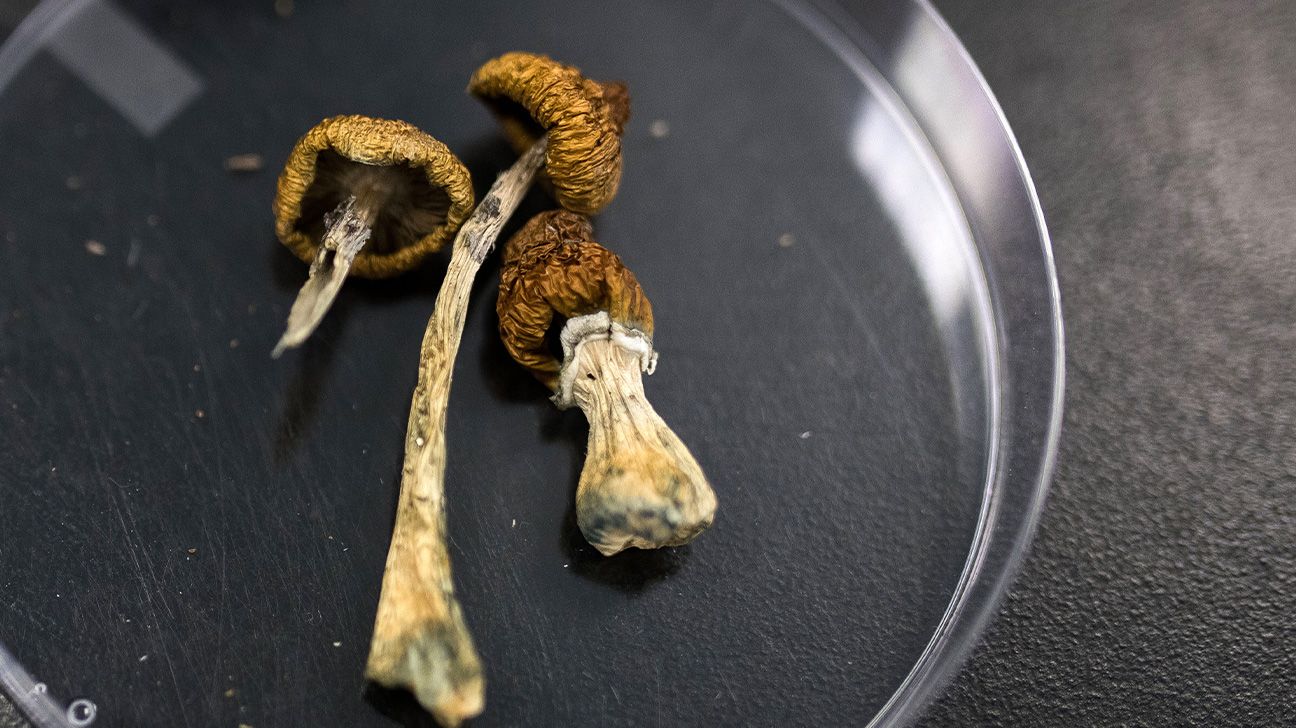
- Psilocybin, also known as “magic mushrooms,” may help smokers quit tobacco for the long term.
- Smokers who received psilocybin alongside counseling were six times more likely to quit than those using nicotine patches in a small trial.
- The findings suggest psilocybin could eventually become another tool to help millions of smokers quit.
Could “magic mushrooms” help tobacco smokers quit for good?
In a new trial, smokers treated with a combination of psilocybin and cognitive behavioral therapy (CBT) were significantly more likely to be abstinent 6 months after treatment than those using nicotine patches and CBT therapy.
The findings were published on March 10 in JAMA Network Open.
Over the past decade, research into the use of psychedelic drugs to treat psychiatric conditions has expanded dramatically. Psilocybin in particular has shown promise as a therapy for addiction-related conditions, including alcohol use disorder and smoking.
The new research suggests that psilocybin combined with CBT may be more effective than nicotine replacement therapy at helping smokers achieve both short- and long-term abstinence.
“There was no question the psilocybin group did much better,” said Matthew Johnson, PhD, associate professor of psychiatry and behavioral sciences and first author of the research.
“We found that for prolonged absence, they had six times higher odds of quitting if they were assigned to the psilocybin group compared to the nicotine patch group,” Johnson told Healthline.
Johnson is the leading researcher in the field of psilocybin and tobacco cessation. This latest trial builds on much of his earlier work, namely a 2014 study that first demonstrated that psilocybin could be safely used as an adjunct in smoking cessation treatment.
The findings published this week continue to establish psilocybin as a potential treatment for individuals with nicotine addiction.
Psilocybin users smoke-free at 6 months
Johnson and his team at Johns Hopkins University conducted a randomized clinical trial to investigate whether psilocybin could help smokers quit more effectively than a standard nicotine replacement therapy.
Both arms of the trial included 13 weeks of CBT, an approach used in counseling. CBT can help smokers identify triggers, manage cravings, and develop practical strategies to quit smoking.
The study enrolled 82 adult daily smokers ages 21 to 80 who had previously tried and failed to quit but still wanted to stop smoking. Participants were 59.8% male and 89% white, smoked roughly a pack per day, and had attempted quitting six times on average before the trial.
One group received a single supervised dose of psilocybin (30 milligrams per 70 kilograms of body weight), while the comparison group followed a standard 8- to 10-week regimen of FDA-approved nicotine patches.
Researchers tracked smoking behavior for six months using self-reported smoking diaries and biological tests to verify that participants had actually stopped smoking.
The researchers found that after starting treatment, 40% of those treated with psilocybin (17 participants) achieved prolonged abstinence, meaning they stopped smoking and remained smoke-free for six months after a brief grace period.
In contrast, only 10.0% of participants in the nicotine patch group (4 participants) achieved the same outcome. This translates to more than six times greater odds of quitting in the psilocybin group.
“It’s definitely refreshing to see someone look at new possibilities for nicotine addiction,” said George Singletary, MD, assistant professor of addiction medicine at the Tulane University School of Medicine, who wasn’t involved in the research.
“With all the deaths we have in this country due to nicotine that are preventable, it’s great to expand the options for treatment,” he told Healthline.
Can psilocybin lead to long-term smoking cessation?
The researchers also investigated a seven-day point-prevalence abstinence, meaning participants had not smoked at all in the previous week at the time of the six-month visit.
By this measure, 52% of the psilocybin group (22 participants) were abstinent compared with 25% of the nicotine patch group (10 participants), representing about three times higher odds of short-term abstinence.
“This is an exciting study,” said Brian Barnett, MD, assistant professor of psychiatry and director of the psychiatric treatment resistance program at the Cleveland Clinic, who wasn’t involved in the research.
“We see that there is more and more evidence showing there’s potential benefit here for patients,” he told Healthline.
However, there are some notable limitations to the study as well.
Barnett pointed out that most of the participants (64.6%) had some previous exposure to “classic” psychedelic drugs, which could limit the generalizability of the findings to a broader population.
But, he added, “It’s an important caveat, but I don’t think it’s so problematic that it negates the obvious superiority of psilocybin to nicotine patch in the study.”
Singletary said he would have liked to have seen the study borne out over a longer time period than just six months. “Many smokers fail within six months, so we really need to see what happens after that point,” he said.
Tips to help you quit smoking for good
Despite decades of progress, smoking remains one of the most harmful and preventable public health threats in the United States.
Cigarette smoking and secondhand smoke cause more than 480,000 deaths each year — about 1 in 5 deaths nationwide.
More than 16 million Americans are living with smoking-related diseases, including:
Although smoking rates have declined, about 11.6% of U.S. adults (28.8 million people) still smoke cigarettes. It’s no secret: quitting is hard.
While nearly two-thirds of smokers say they want to quit, the majority of them won’t. In any given year, fewer than 10% of adults who smoke successfully quit.
“Nicotine hijacks the brain’s reward learning circuitry. It shifts your brain toward being very preoccupied with getting the next exposure to nicotine,” Barnett said.
Fortunately, there are more options and resources available to stop smoking today than ever before.
Nicotine replacement therapy (NRT), which includes patches and gums, is a longtime staple that can help, but is most effective when paired with other interventions like CBT, or other forms of counseling, and medication.
Medications to help quit smoking include:
- Bupropion (Zyban) — An antidepressant that is also prescribed to help stop smoking. It works by affecting specific neurotransmitters involved in feelings of reward and pleasure.
- Varenicline (Chantix) — Reduces cravings and withdrawal by partially activating nicotine receptors in the brain. Simultaneously, it blocks nicotine, which reduces the pleasurable effects of smoking.
“The biggest takeaway is: don’t quit trying to quit. The more times you try to quit, the more likely you are to have success,” said Singletary.
Johnson told Healthline that he doesn’t expect psilocybin to replace any of these mainstay therapies, but instead to give smokers more options.
“I just want more tools in the toolbox to help empower as many people [as possible] that want to quit,” he said.
Psilocybin represents a potentially safe and effective therapy to help quit smoking, but experts caution that these studies are undertaken in controlled environments utilizing specific dosages.
“There are risks with psilocybin and other psychedelics, including legal risks. Certainly, I don’t advise anyone to do this themselves. Not only is it less safe doing it on your own, but the chances of it working would probably be much less than in therapeutic hands,” Johnson said.
Resources to help you quit
Quitlines like 1-800-QUIT-NOW can help you quit smoking and vaping for good. Other quit resources include:
Psilocybin 6 Times More Effective Than Nicotine Patch to Help Smokers Quit
Source: Pinoy Lang Sakalam
0 (mga) komento:
Mag-post ng isang Komento