


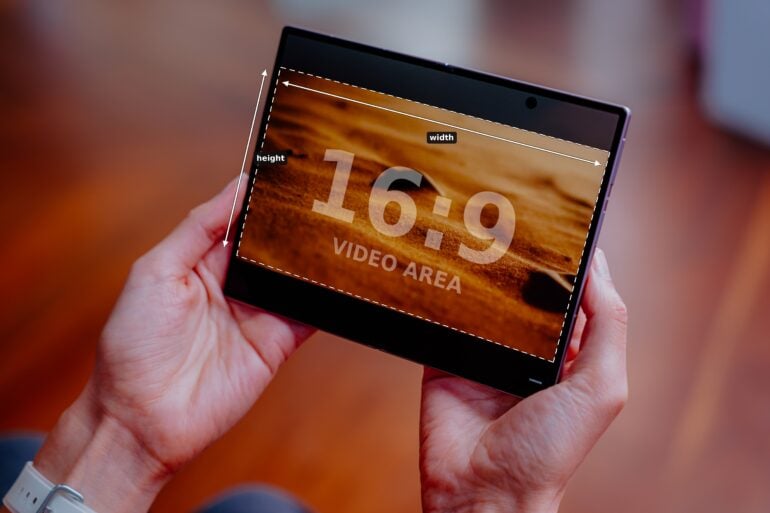
Samsung’s new passport-shaped Galaxy Z Fold8 looks like a big change over the more ‘conventional’ Galaxy Z Fold8 Ultra. But does the wider screen actually give you more? We measured every screen, in every orientation, to find out.
Two phones, two very different shapes
Both phones unfold into a small tablet. The difference is which way that tablet is shaped, which can be described by its aspect ratio.
The Z Fold8 Ultra is tall. Closed, the outer screen is a long, narrow 21:9. Open, the inner screen is almost square at 10.5:10.
The Z Fold8 is wide. Closed, the outer screen is a squatter 16:10. Open, the inner screen is 4:3, close to the proportions of an actual passport, which is where the nickname comes from.
Here is the important part. The shape of a screen can determine how much of it your content can use, not just the size. Screen sizes are quoted as a diagonal, and that number hides a lot. Let’s look at what that means.
Watching video: the bigger screen loses
A normal video has a 16:9 aspect ratio. When you play it full screen, it has to fit inside whatever shape your phone is. Whatever does not fit gets filled with black bars. This is sometimes called a “letterbox”.
So we worked out the largest 16:9 video each screen can actually display. Sizes are based on each phone’s dimensions, but we might be a few millimeters off.
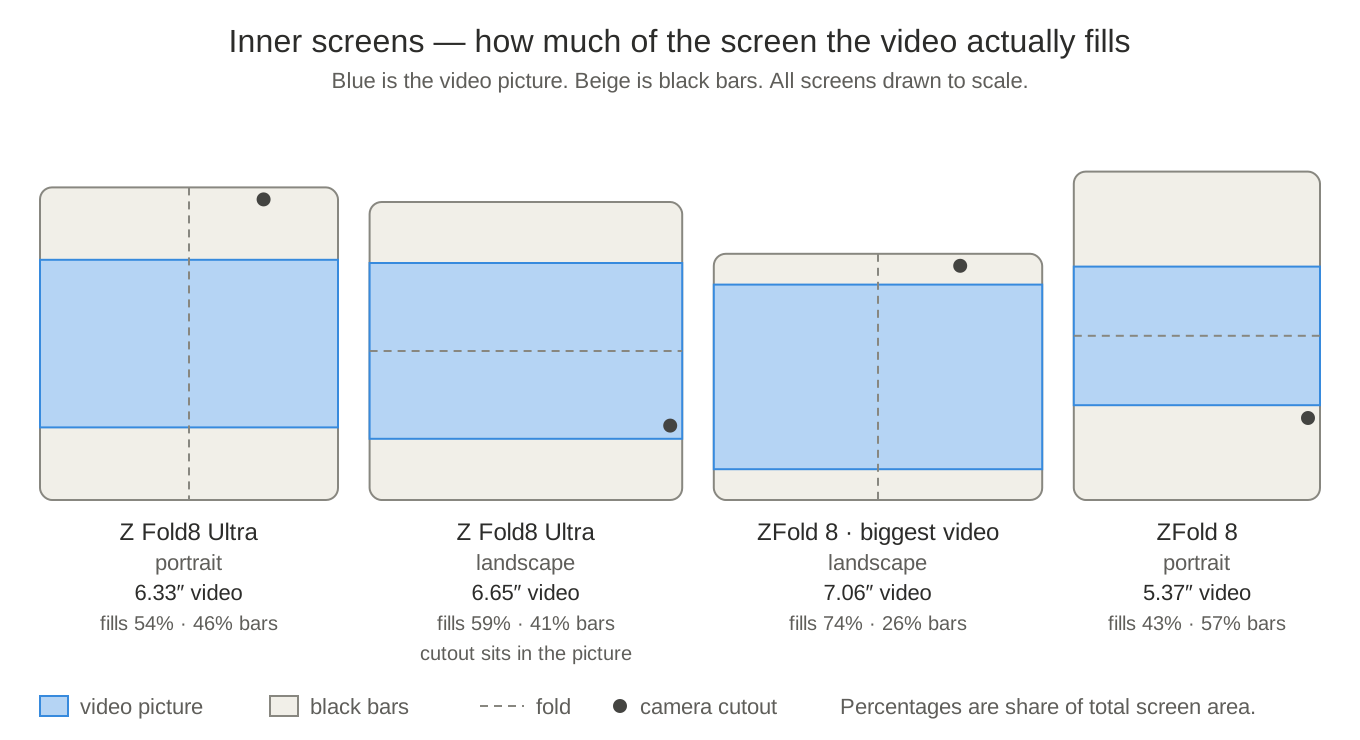
The Z Fold8 Ultra has an 8-inch inner screen. Watch video on it in landscape orientation and only 59 per cent of that screen shows picture. The other 41 per cent is black bars. And the camera cut out takes up part of the video. An if you watched a video in portrait mode, just over half (54%) of the entire 8 inch screen is used.
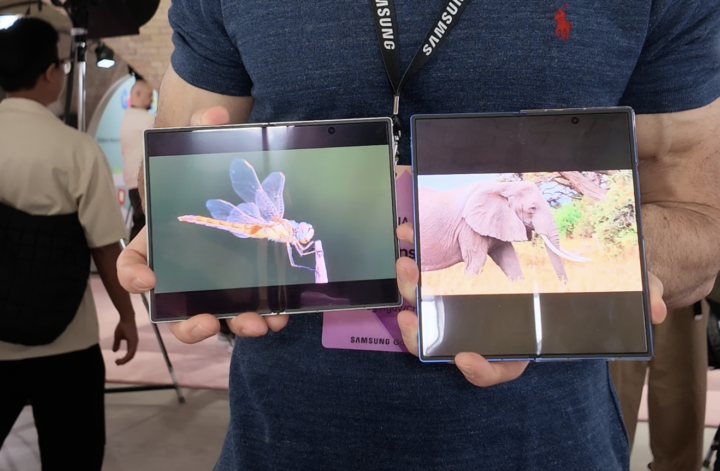
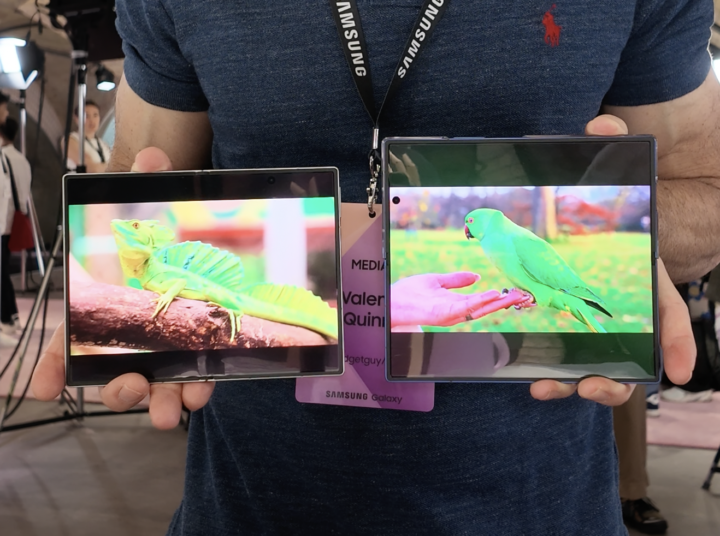
Switching phones, the Z Fold8’s inner screen is smaller at 7.6 inches. But because it is a wider 4:3 shape, the video fills 74 per cent of it. The result is a 7.06-inch video on the smaller phone, versus 6.65 inches on the bigger one.
The smaller screen wins. And it is not close once you look at the picture area: the Z Fold8 shows a video about 13 per cent larger.
The same thing happens on the outer screens.
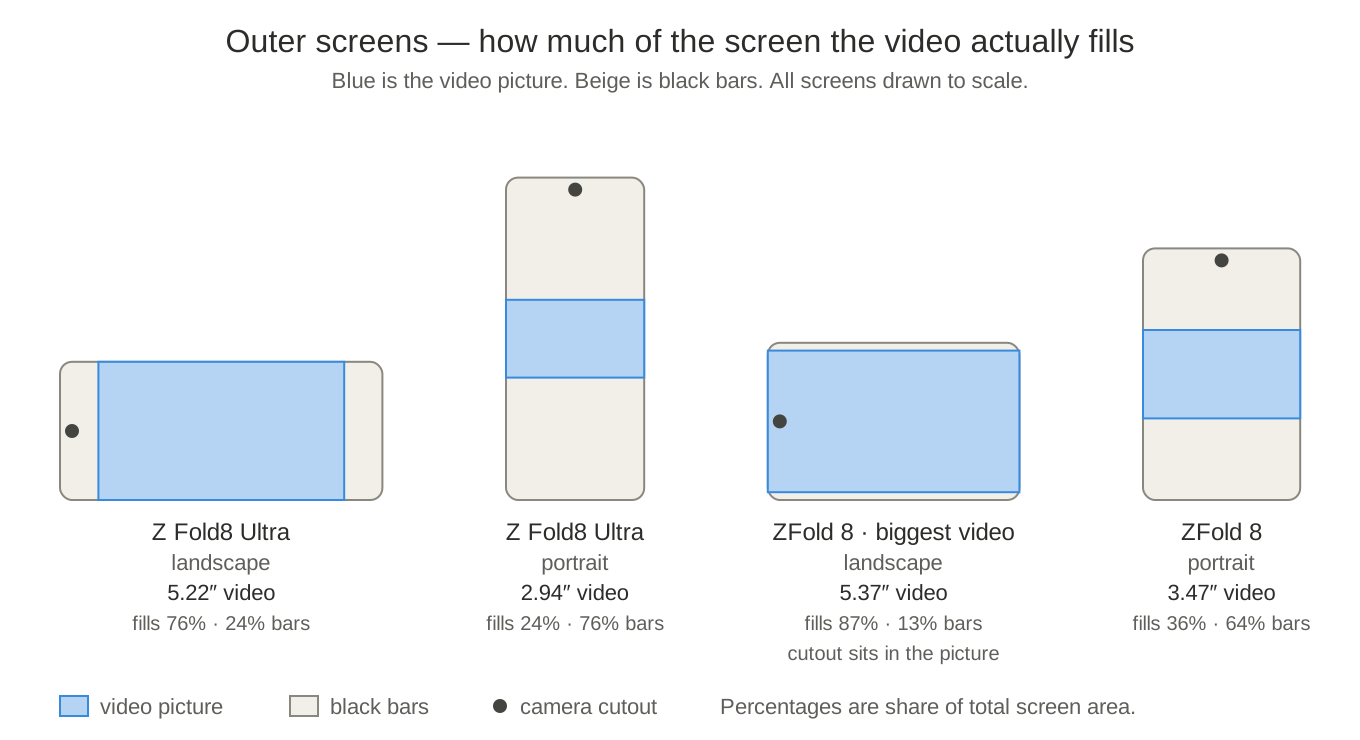
The Ultra’s outer screen is a full inch bigger on paper, at 6.5 inches versus the Z Fold8’s 5.5 inches. Yet the Z Fold8 still plays the larger video, because its 16:10 shape is much closer to the shape of the video itself. The Ultra uses 76 per cent of its outer screen. The Z Fold8 uses 87 per cent.
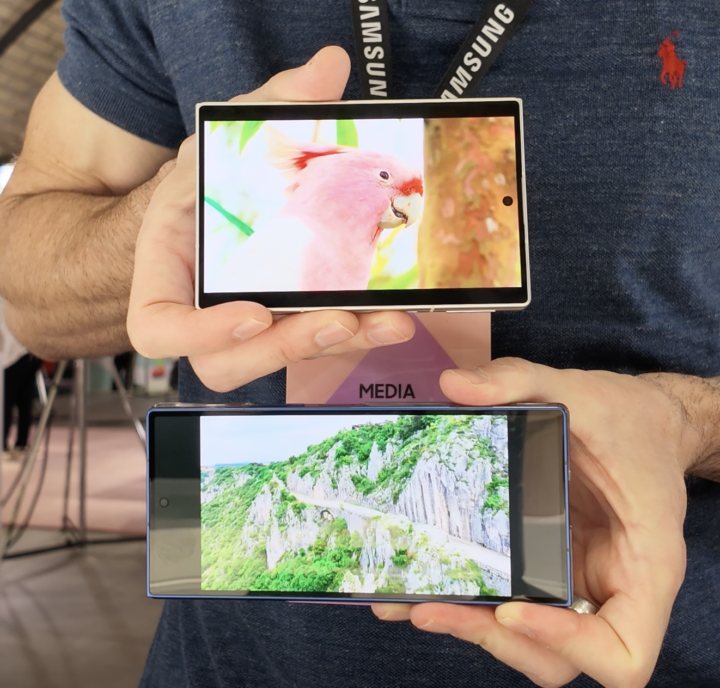
Keep in mind, however, that the Z Fold8’s outer screen fills so completely, the camera cutout sits inside the picture when you turn it sideways. The Ultra’s cutout hides in the black bar. It is a small trade for a bigger image.
Z Fold8 Ultra vs ZFold 8 video playback – summary table
| Scenario | Z Fold8 Ultra | ZFold 8 | Bigger video |
|---|---|---|---|
| Outer · landscape | 5.22″ video fills 76% · 24% bars | 5.37″ video fills 87% · 13% bars | ZFold 8 |
| Outer · portrait | 2.94″ video fills 24% · 76% bars | 3.47″ video fills 36% · 64% bars | ZFold 8 |
| Inner · landscape | 6.65″ video fills 59% · 41% bars | 7.06″ video · biggest overall fills 74% · 26% bars | ZFold 8 |
| Inner · portrait | 6.33″ video fills 54% · 46% bars | 5.37″ video fills 43% · 57% bars | Z Fold8 Ultra |
But not all video is full screen
Most of the video people watch these days is not full screen at all. It is in a feed. TikTok, Instagram, YouTube Shorts, Facebook, news apps: you scroll, and video plays inside a column.
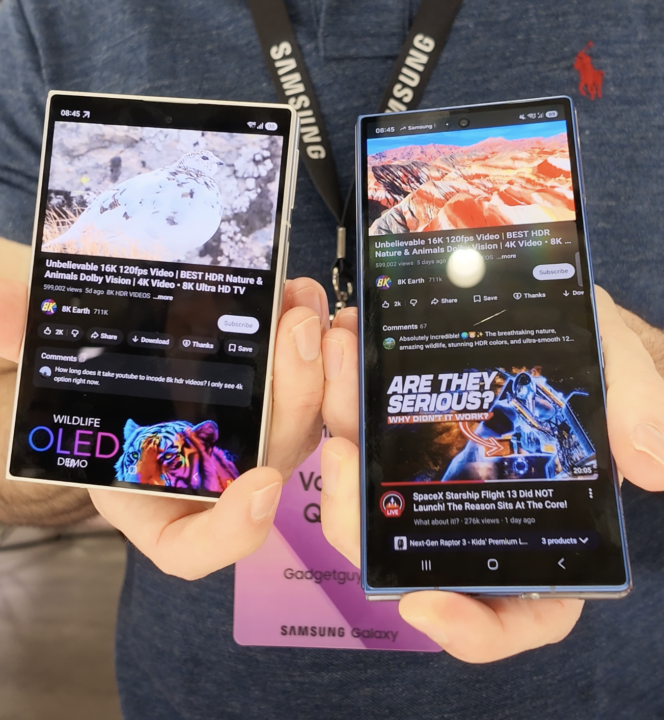
This is where the Ultra makes more sense. Held upright, its taller screen shows more of a feed at once, and video inside a narrow column suits a tall display. Turn both phones upright and the Ultra shows the bigger video: 6.33 inches against 5.37 inches.
So the honest answer is that it depends how you watch. If you sit down and watch something properly, the Z Fold8 is better. If you scroll feeds all day, the Ultra has the advantage.
Two apps at once: which shape works harder?
Another reason people buy a foldable phone is for multitasking. Open the phone, run two apps side by side, one on each half of the fold.
Here the two shapes produce very different results.
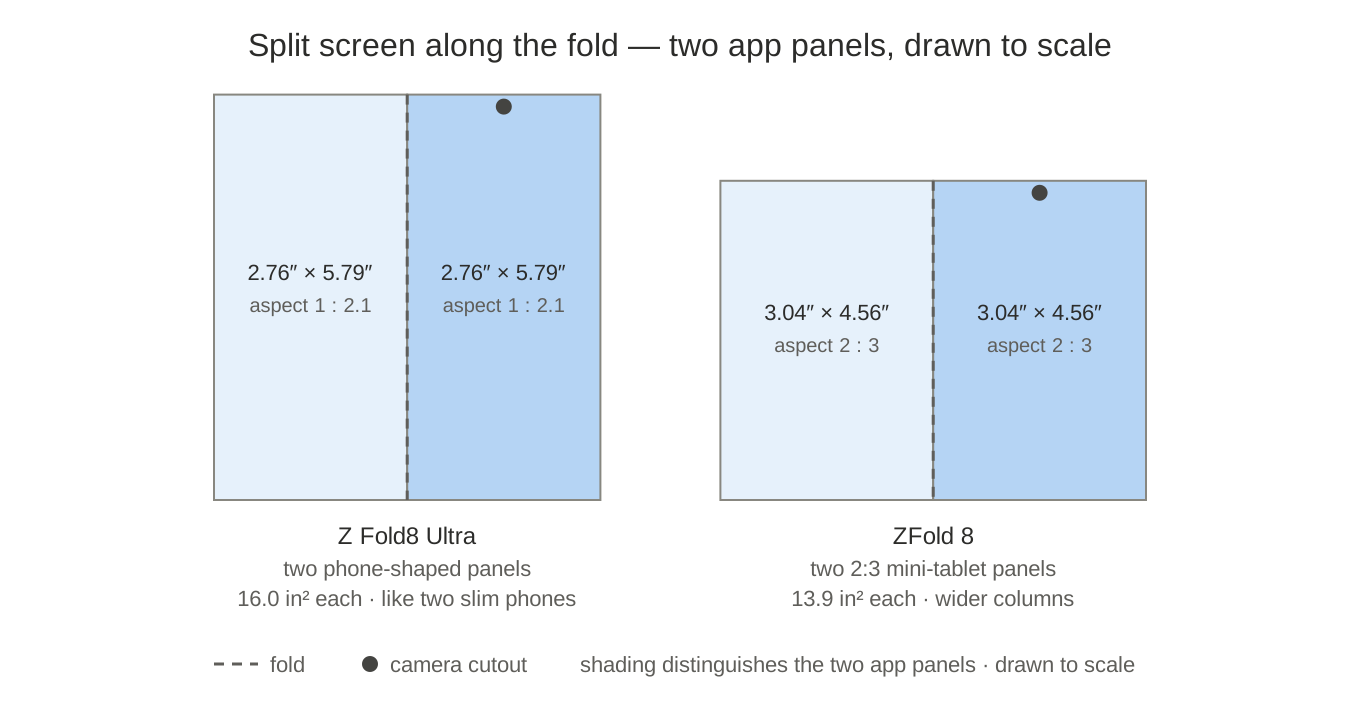
The Ultra gives you two tall, narrow panels. Each one is almost exactly the shape of a normal phone screen. With this, apps look the way they were designed to look, and you effectively get two phones side by side.
The Z Fold8 gives you two panels shaped more like the pages of a book. They are slightly smaller in area, but wider, at just over three inches across each.
That extra width matters more than it sounds, as many things people do in split screen are hungry for width, not height.
What each one is better at
The Z Fold8’s wider panels suit reading a document while taking notes, browsing a website next to an email, using a calendar, watching a video in one panel while chatting in the other, and typing, because the keyboard gets more room.
The Ultra’s taller panels suit running two phone apps side by side, such as messages and social media, and scrolling long feeds where height is what you want.
For most people, most of the time, the wider panels win. The tasks people actually do in split screen tend to be the ones that need width.
So who should buy which?
Buy the Z Fold8, the passport shape, if you watch video properly, read a lot, work across two apps at once, or you are coming from a flip phone and want something that feels like a small tablet. It is the better all rounder, and the fact that it does more with a smaller screen is the whole point.
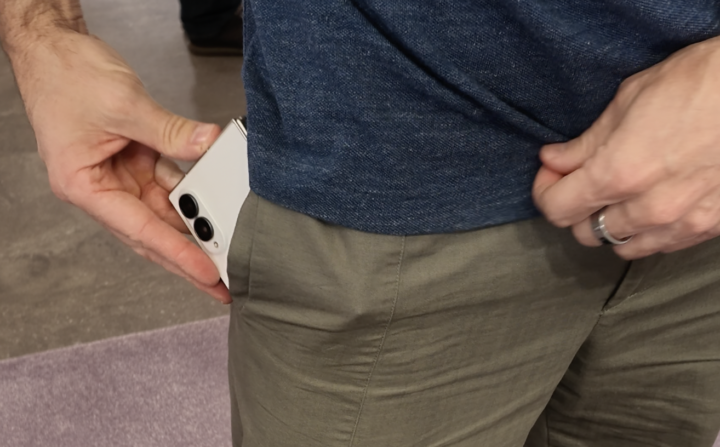
Buy the Z Fold8 Ultra if you live in feeds, want the biggest phone-shaped screen when it is closed, and want the closest thing to two phones in one when it is open.
The lesson here is that screen size on a spec sheet is a diagonal measurement, and a diagonal measurement can hide a lot of black bars.
The passport shape is not a gimmick. It is a device built around the shape of the things people actually look at. This is why we think it works, and why we will see more of it. If the rumours about Apple’s first foldable are right, which they are very likely to be, and it arrives with much the same proportions, Samsung will have got there first with the shape that matters.
Valens Quinn attended the Samsung UnPacked event in London, England as a guest of Samsung Australia
The post Galaxy Z Fold8 vs Z Fold8 Ultra: we did the maths on the passport shape appeared first on GadgetGuy.
0 (mga) komento:
Mag-post ng isang Komento