


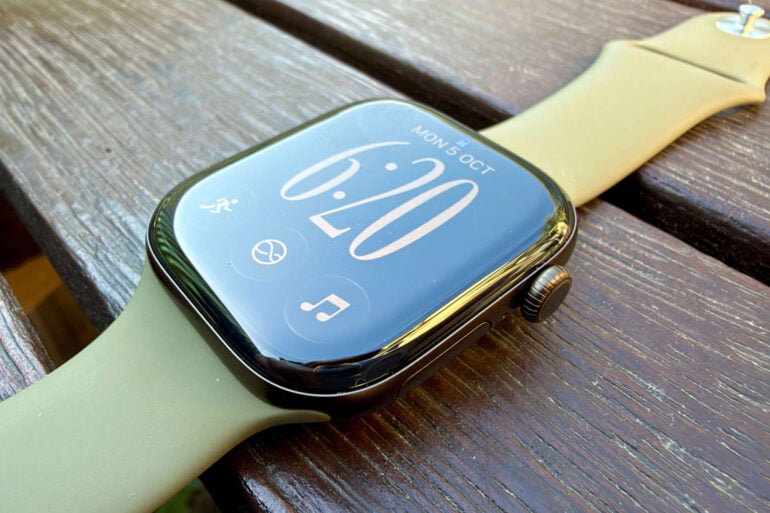
With more grunt and improved sensors to power its new ‘Health Sensing System’, Apple Watch Series 12 keeps a close eye on your wellbeing.
Once you reach a dozen versions of a highly successful product, you obviously have a pretty good idea of what works. That’s why we only tend to see iterative improvements, which naturally makes it harder to get excited about every Shiny New Thing .
.
This time around, the Apple Watch Series 12 is a more impressive upgrade than usual. It packs a new processor to support a few smart features, while health and fitness fans will be excited about the revamped rear sensors that press up against your skin.
They say you can’t put a price on your health, but it’s good to see that at $649 the base Series 12 model is actually $30 cheaper than the Series 11, returning to the price of the Series 10.
Apple Watch Series 12 first impressions
At first glance, the Apple Watch Series 12 is identical to the last few models. The spec sheet reveals it is a fraction bigger than the Series 11, at around 0.1mm thicker and 2 g heavier.
You’ve still a choice of aluminium and titanium bodies in a range of colours, plus Apple has re-introduced the full polished ceramic option.
The watch body sticks with Apple’s standard 42 or 46mm rectangular design (bumped up 1mm each, back when the Series 10 launched), featuring the same rotating crown and flush secondary button.
With WatchOS 27, clicking the digital crown now displays six of your most-used apps rather than the full list, which makes life easier.
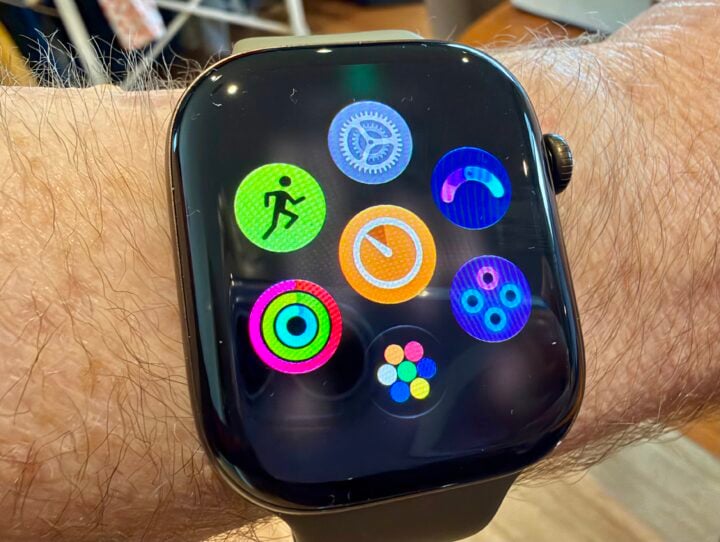
Likewise, the Series 12 still relies on the same impressive LTPO3 OLED Always‑On Retina display – offering a bright, vivid image with wide viewing angles.
It’s not obvious to the naked eye, but the Apple Watch Series 12 aluminium cases now feature stronger Ceramic Shield 2 glass.
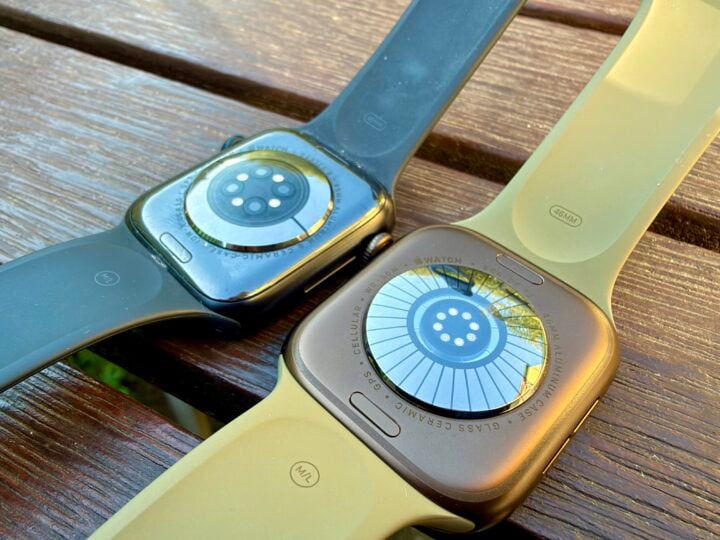
Flip over the Series 12, and you can’t miss the changes to the rear sensors. The new ‘daisy-petal’ layout contains 32 electrode segments, rather than two, which significantly improves ECG and biometric accuracy.
At the centre of the electrode segments, Apple has doubled the number of LEDs and receptors for shining light on your skin. This fourth-generation, always-on optical heart sensor lets the Series 12 capture your heart rate more accurately and more often, checking every five seconds rather than every few minutes.
These improvements ensure your readings are more accurate if you tend to wear your watch loose on your wrist.
Thankfully, the battery life remains up to 24 hours, which can stretch to 38 hours in Low Power Mode.
More efficient GPS and heart rate readings mean you should get an extra hour or two on long runs, walks and hikes. That’s a welcome improvement but, if it’s still not enough juice for your adventures, consider stepping up to the Apple Watch Ultra 4.
It sounds similar to the iPhone Adaptive Power Mode introduced with iOS 26. Anyone who’s tried to use the AllTrails iPhone app on an all-day hike will appreciate how quickly it drains the battery.
The Series 12’s faster battery charging is also a welcome addition, especially if you wear your watch for sleep tracking. Just 15 minutes on the charger provides up to 12 hours of normal use. Even better, a five-minute charge when getting ready for bed is enough to cover 10 hours of sleep tracking.
Apple Watch Series 12 specifications and price
| Screen Size | 42 mm: Fits 140–245mm wrists 46 mm: Fits 130–200mm wrists |
| Screen resolution | 42 mm: 374 x 446 pixels 46 mm: 416 x 496 pixels |
| Display | Always‑On Retina display with wide‑angle OLED and LTPO3 1Hz refresh Ceramic Shield 2 (aluminium cases) Sapphire front crystal (titanium and ceramic cases) 2,000 nits peak brightness 1 nit minimum brightness |
| Body | Aluminium, Titanium or Ceramic |
| Dimensions | 42 mm: 42 x 37 x 9.7mm (Ceramic model a fraction larger) |
| 46 mm: 46 x 40x 9.7mm (Ceramic model a fraction larger) | |
| Weight | 42 mm: Aluminium 32.2 g Titanium 36.5 g Pearl White ceramic 41.7 g Night Blue ceramic 42.8 g |
| 46 mm: Aluminium 39.5 g Titanium 44.9 g Pearl White ceramic 51.3 g Night Blue ceramic 52.9 g | |
| Processor | S11 with 64-bit dual-core processor 4-core Neural Engine |
| RAM | 4GB |
| Storage | 64GB |
| Connectivity | W3 Apple wireless chip Second‑generation Ultra Wideband chip Wi-Fi 4 802.11b/g/n 2.4 GHz and 5 GHz Bluetooth 5.3 Optional Cellular – LTE and UMTS |
| Sensors | Electrical heart sensor, always‑on optical heart sensor, blood oxygen sensor and temperature sensor Compass Always‑on altimeter High‑g accelerometer High-dynamic-range gyroscope Ambient light sensor Depth gauge to 6 metres Water temperature sensor |
| Ruggedness | Waterproof to 50 m, IP6X dustproof |
| Colours | Aluminium case: Dark Bronze, Light Gold, Black, Space Grey Titanium case: Radiant Gold, Natural Ceramic case: Pearl White, Night Blue |
| Price | From $649 RRP 42 mm From $739 RRP 46 mm Add $150 for 4G LTE |
| Website | Apple Australia |
Apple’s fitness features
Under the bonnet, the Apple Watch Series 12 packs the new S11 chip and doubles the RAM to 4GB. It runs the new watchOS 27 and should get updates for four or five years.
Apart from the S11 chip and new rear sensors, it’s basically the same hardware as the Series 11. But both these hardware improvements unlock a range of new software features.
Starting with the sensors, Apple claims the Series 12 offers the most accurate heart rate sensing in a wearable. This accuracy underpins a new real-time heart rate complication on the watch face, plus the improved heart rate app on the watch provides richer data.
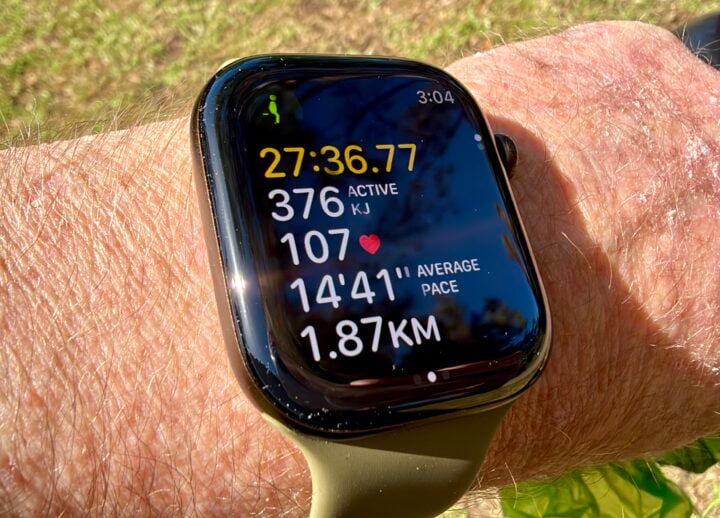
Whether you’re walking or at the gym, Apple sticks with the same text-only readout, which displays time, kilojoules, heart rate and distance if relevant.
Unlike Android watches like the Google Pixel Watch 5, there’s no indication of your cardio load on most exercises. You can’t see at a glance how hard you’re working in terms of exertion – for some reason, Apple only offers this in a handful of activities like Outdoor Run. That’s disappointing, because a glanceable ‘zone’ indicator can encourage you to push yourself a bit harder.
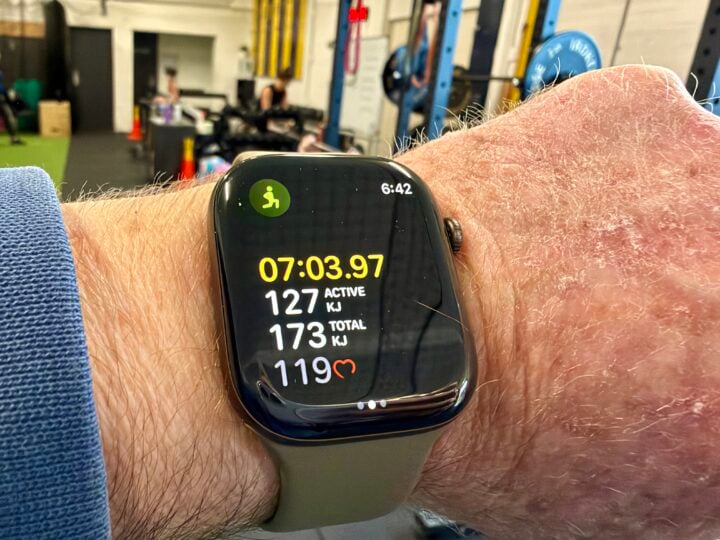
There’s also a new steps complication, thanks to an improved pedometer algorithm that’s more accurate when you’re on a treadmill or carrying something while walking outside.
The walking auto-detecting on my old Apple Watch Series 9 is temperamental. Even though my dogs and I always follow the same path, the spot where the watch asks if I want to record an outdoor walk varies by about 300 metres. Occasionally, it fails to notice at all, even on a 45-minute walk.
The fact my watch struggles is understandable. My dogs dawdle when we first set off, plus I’m holding the lead in my hand. (I’m still waiting for Apple to add a separate ‘Dog walking’ exercise, so my hounds don’t drag down my walking stats).
The new Series 12 is more consistent, with walking auto-detect always kicking in at roughly the same location, around 150 metres before Series 9 tends to speak up. Just as I was starting to trust it, it failed to auto-detect a walk on day 8 even though there was a lot less dawdling than usual.
The watch’s revamped sensors also improve Heart Rate Variability readings, which measure tiny changes in the amount of time between your heartbeats. High variability is good, because it means your nervous system shifts easily between stress and relaxation (something that my body struggles with).
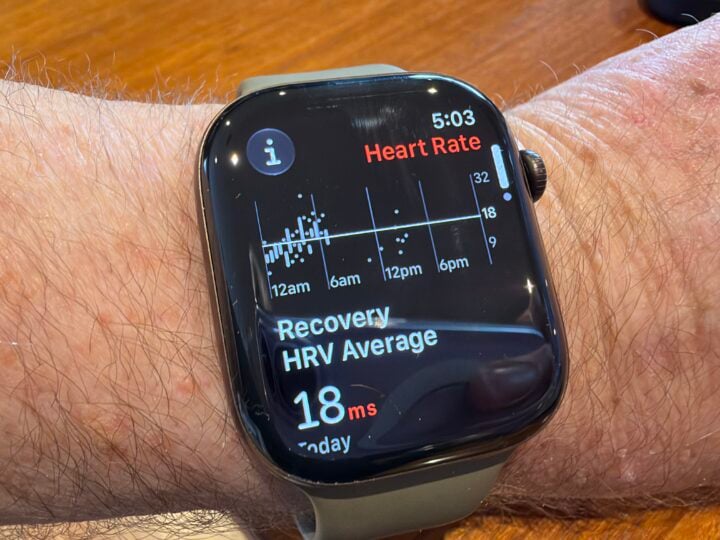
The Series 12 measures both HRV and Recovery HRV, which contribute to overnight and new daytime vitals. Recovery HRV measures stress and fatigue, acting as a good indicator of whether you’re read to push yourself or perhaps coming down with something.
Both readings contribute to Apple’s new ‘Readiness Score’, along with heart rate, respiratory rate, wrist temperature and blood oxygen. Plus, it considers your sleep quality, recent activity and calorie estimates.
In return, it seems less obsessed with encouraging you to close your daily fitness rings regardless of how you feel. It still insists on regularly telling you to stand up, but thankfully you can kill this.
As of the Series 11 watches, if you wear the Apple Watch to bed, you’re given a Sleep Score out of 100. It’s a lot more accurate than smartphone apps which sit on the bedside table and only listen to you sleep, often failing to notice that you’re lying there awake (see below).
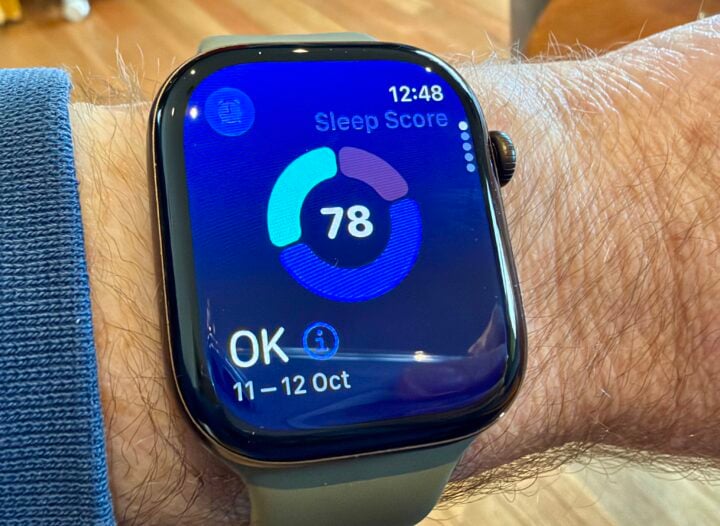
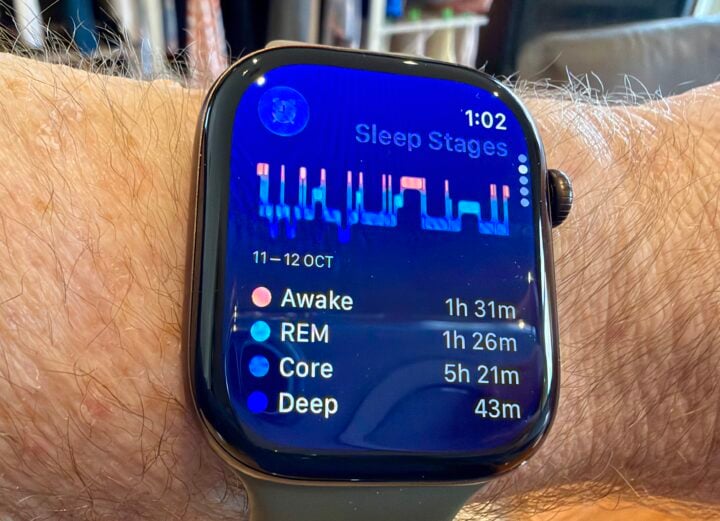
For what was a pretty good night by my standards, the watch says 78% while Sleep Cycle on the iPhone claimed 98%, recording less awake time and more deep sleep.
Based on all this, you’re given a ‘Readiness Score’ out of 10, so you know whether it’s a good day to go hard on your fitness goals, stick with a standard load or take it easy.
Of course, it’s not a new concept, following in the footsteps of Google/Fitbit, Garmin, Oura and Whoop. Unlike most rivals, Apple’s Readiness Score adapts throughout the day if you hit the gym or snooze on the couch.
You need to wear the Apple Watch Series 12 for seven days and nights before you get your first Readiness Score. It appears in the watch’s Vitals app in the morning, along with a breakdown of each contributing health stat. You can also see the score on your iPhone, although it’s in the Fitness app, even though all the individual metrics are in the Health app.
A Readiness Score out of 10 is a handy indicator, but if you intend to heed it, you’ll want to spend some time understanding what it all means. Especially if you have ongoing health problems and don’t have the luxury of only being active when you feel up to it.
Health issues mean I often sleep poorly, and my HRV is always very low. When the watch says a reading is ‘Typical’ or “within typical range”, it means my typical range, not typical for a 50-something male of my height and weight. That’s why it wants to capture a week’s worth of data before providing you with insights.
Despite ticks across the board and telling me I was “rested and ready for today”, on the first morning I still only got a Readiness Score of 6, claiming I was “Ready”.
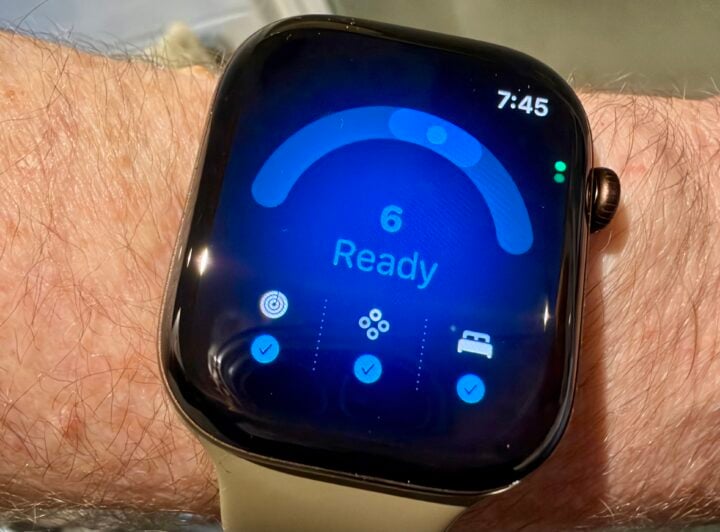
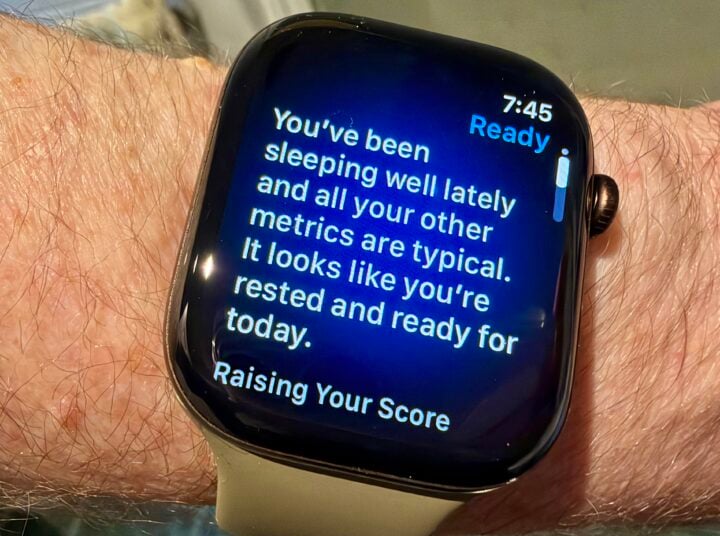
By my own reckoning, I would have given myself an 8 or 9, considering I slept better than most nights and felt better than most mornings. I suspect my low HRV and Recovery HRV drag down my score, even though they’re average for me.
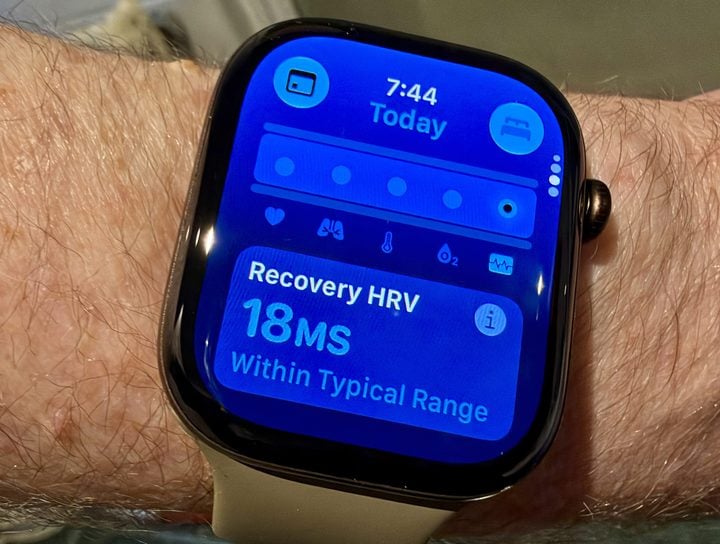
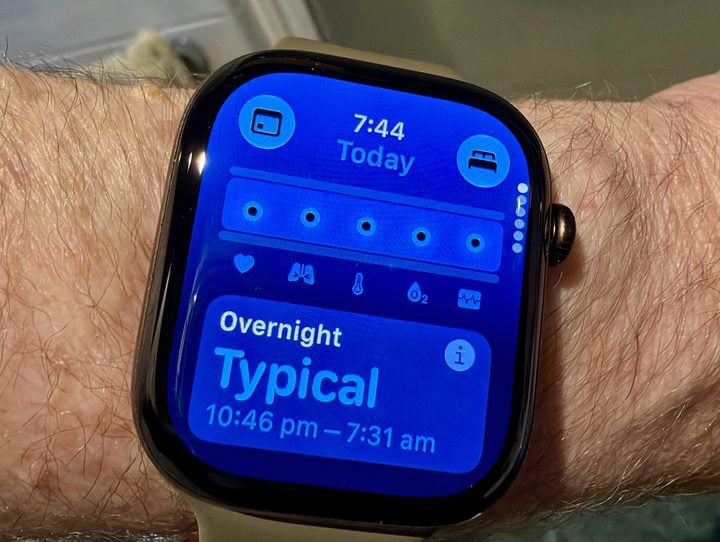
I thought it might be impossible for me to score much higher than 6 but, over the next few days, I crept up to 7 “Ready”, and then eventually hit 8 “Go for it”. Sleep was a factor, but clearly it was taking more into account.
Not surprisingly, Apple includes a disclaimer in the small print: “Readiness does not account for all health factors such as existing conditions or medication, and should not be solely relied on to determine whether it is safe to exercise”.
AI features
This brings us to the Apple Watch Series 12’s new S11 chip. It powers Siri AI for a more conversational experience, along with Audio Intelligence features Live Rewind, Siri Recap, Shazam and Sound Recognition.
The S11 chip features what Apple calls a “secure enclave”, so these features are handled onboard and never shared, but some of them will still concern those worried about privacy.
Shazam identifies nearby music, which is already a common Android feature. Sound Recognition is basically an accessibility feature, notifying people who are hard of hearing of important sounds like sirens, alarms, doorbells and crying babies.
Live Rewind and Siri Recap are more controversial but won’t be available until later this year. A double-click on the digital crown activates Live Rewind to show a transcript of what was said in the last 15 seconds – supposedly helpful if someone shared “a book recommendation, menu specials or directions you didn’t quite catch”.
Meanwhile, Siri Recap summarises your conversations throughout the day. Rather than a recording or transcript, it produces “very high-level notes” which don’t attribute speakers and supposedly strip out sensitive information. You can check the summaries later on your iPhone.
For a company that pushes privacy as a selling point, it’s astonishing that Apple would think it’s okay for its watches to listen to everything said around you, all day. Even if they are opt-in features, the people around you don’t have the ability to opt out.
Despite the S11 chip’s “secure enclave” and other reassurances, don’t be surprised if there is a smart glasses-style backlash against wearing Apple Watches in sensitive environments like business meetings.
Who is the Apple Watch Series 12 for?
The Apple Watch Series 12 is a worthy successor to the Series 11, offering a major step up thanks to the new chip and sensors. That said, as an upgrade, it’s only likely to tempt those who care about Siri AI and/or advanced health and fitness.
Playing catch up with features like Readiness Score, the improvements mostly seem designed to stop people abandoning Apple in favour of smartwatches with stronger high-end fitness credentials.
Easier access for Siri AI will please those who like to chat with their smart assistant during the day, but Live Rewind and Siri Recap seem like novelties that are more likely to cause trouble than actually be useful.
Frequently asked questions
Apple claims the watch’s battery lasts up to 24 hours of regular use, and up to 38 hours when set to ‘Low Power Mode’. Depending on how you use the watch, the battery can drain quicker, especially if you regularly use the built-in GPS and workout tracking features. Fortunately, the Apple Watch Series 12 charges faster than previous models, providing up to 12 hours of use from a quick 15-minute charge.
Apple’s latest watch uses new sensors that provide more accurate data, like heart rate and sleep quality. It also includes more memory, which, combined with the new S11 chip, provides smoother performance. By default, the Series 12 supports Apple’s latest WatchOS 27 software, introducing new features like Readiness Score.
Yes, the watch’s new S11 chip runs various Siri AI features, although some are not available at launch. Coming in a future update are Live Rewind and Siri Recap, opt-in features that can transcribe and summarise conversations.
The post Apple Watch Series 12 review: New kind of health kick appeared first on GadgetGuy.
0 (mga) komento:
Mag-post ng isang Komento