


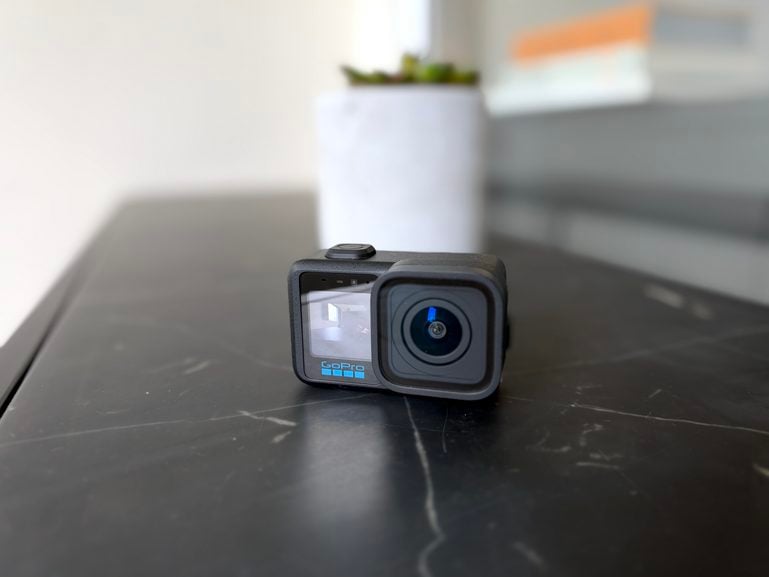
The GoPro Mission 1 Pro is a big deal. Not only is it a drastically improved camera in terms of its sensor and image quality, it retains the rugged and compact body that people know GoPro for, but now it has a lot of cinematic capabilities as well.
I’ve had a chance to use the Mission 1 Pro here at GadgetGuy for a variety of filming jobs, including videos for the YouTube channel, as well as taking it out to see what it’s capable of.
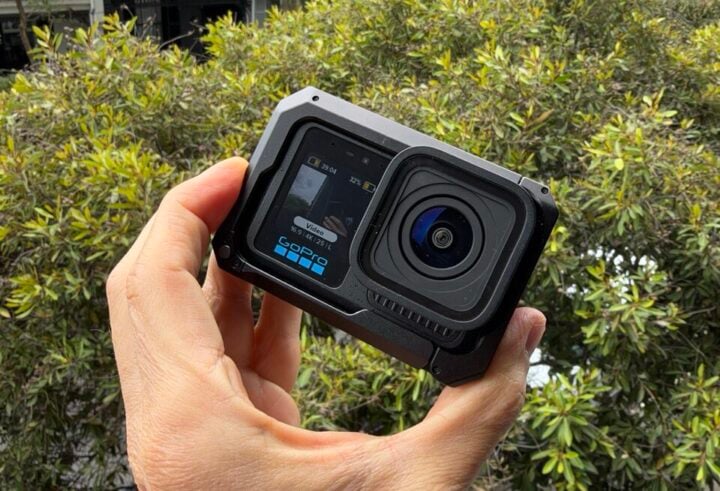
And in a world where 360-degree cameras, gimbal cameras and our smartphones are offering incredible quality in a compact package, the question remains whether this type of camera is still relevant in a creator-driven market. Let’s find out.
GoPro Mission 1 Pro specifications and price
| Sensor and processor | 1-inch sensor, GP3 processor |
| Lens | f/2.8, 159° field of view; SuperView, Wide, Linear and Linear + Horizon Lock digital lenses |
| Video | 8K 60fps, 8K Open Gate 30fps, 4K 240fps, 1080p 480fps, 960fps Burst Slo-Mo |
| Colour and codec | 10-bit, GP-Log2, HLG HDR; H.265 up to 240Mbps |
| Photo | 50MP or 12MP, RAW (.GPR), Night photo |
| Stabilisation | HyperSmooth (Off, AutoBoost, On), 360° Horizon Lock |
| Waterproof | 20m without a housing |
| Screens | 2.59-inch rear touch OLED, 1.4-inch front display |
| Battery | 2150mAh Enduro 2 |
| Audio | 4 microphones, 32-bit float recording |
| Connectivity | Wi-Fi 6, Bluetooth 5.3, GPS, USB-C |
| Storage | microSD |
| Weight | 207g |
| Buy | Buy the GoPro Mission 1 Pro from GoPro Australia |
| Price (AUD) | A$1,099.95 (Point-and-Shoot Grip A$154.95) |
What is the GoPro Mission 1 Pro?
The Mission 1 series now sits at the top of GoPro’s range, above the HERO13 Black. GoPro describes it as a compact cinematic camera system and pitches it on four points: the image quality of modern pro cameras, the portability of a compact point-and-shoot, the durability of an action camera and cinematic capabilities for professionals.
There are three models. The Mission 1 (A$949.95) and Mission 1 Pro (A$1,099.95) share a fixed f/2.8 lens with a 159-degree field of view, while the Mission 1 Pro ILS (A$1,099.95) swaps the fixed lens for a Micro Four Thirds mount and is weatherproof rather than waterproof. All three use a 1-inch sensor and GoPro’s new GP3 processor.
The Pro adds 8K at 60fps, 8K Open Gate, 4K at 240fps and 1080p at 480fps, plus a 960fps Burst Slo-Mo mode. Compared with the HERO13 Black, that’s a much larger sensor (1-inch versus 1/1.9-inch), 50MP photos instead of 27MP, double the maximum bit rate at 240Mbps, and waterproofing to 20m instead of 10m without a housing.
New kits
[Update] GoPro has since launched three Mission 1 Pro kits. The Ultimate Creator Edition (A$1,849.95) adds the Fluid Pro AI gimbal, Wireless Mic Complete Kit, Light Mod 2 and Mission 1 Series Media Mod. The Creator Edition (A$1,699.95) includes the Media Mod, Volta 2 Battery Grip and Wireless Mic Complete Kit. The Mountain Bike Bundle (A$1,219.95) adds a Handlebar/Seatpost/Pole Mount and Chesty chest mount.
How we tested it
For testing, we updated to the latest firmware and tried out the Mission 1 Pro in a variety of scenarios. Compared with DJI’s Osmo Action cameras, earlier GoPros were known for superior resolution but suffered when it came to low light. So I took the Mission 1 Pro out on a walk at dusk and took photos and videos until the sun set and it became dark, lit only by the moon and streetlights.
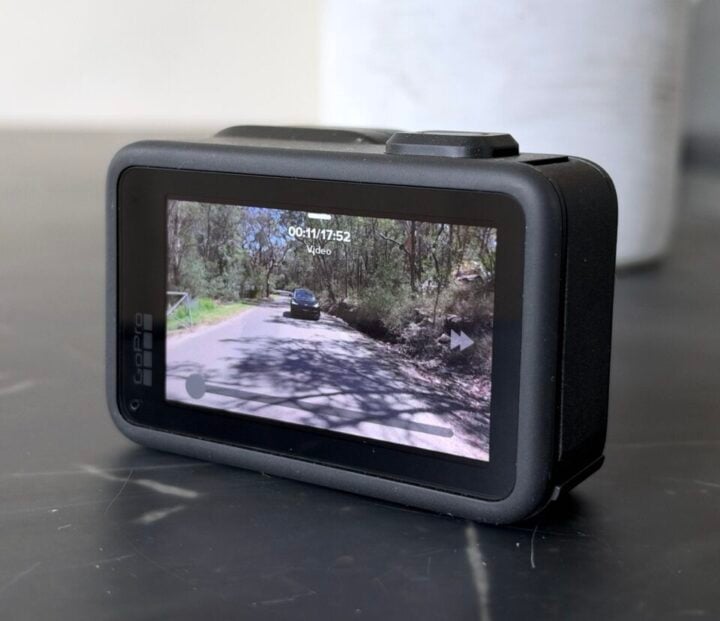
We also took the Mission 1 Pro on a recent EV shoot, where we mounted it both inside and outside our test vehicle to capture footage, and we used it on a robot pool cleaner video for some underwater filming. There are so many uses for the Mission 1 Pro, including as an action cam, a vlogging camera or a stills camera on holidays, so unfortunately we couldn’t test every scenario.
In terms of settings, we tried a range, including high and low frame rates, GoPro’s GP-Log2 log profile, 8K60, 8K Open Gate and 4K240 slow motion.
Low light: dusk and night
In general, the 1-inch sensor is a big factor in low-light performance, and the Mission 1 Pro is definitely improved over its predecessors. For photos, you can shoot in 12MP mode rather than 50MP, making use of pixel binning to allow for better low-light sensitivity. I found that photos captured much more detail than the last GoPro I tested, and there was considerably less noise.
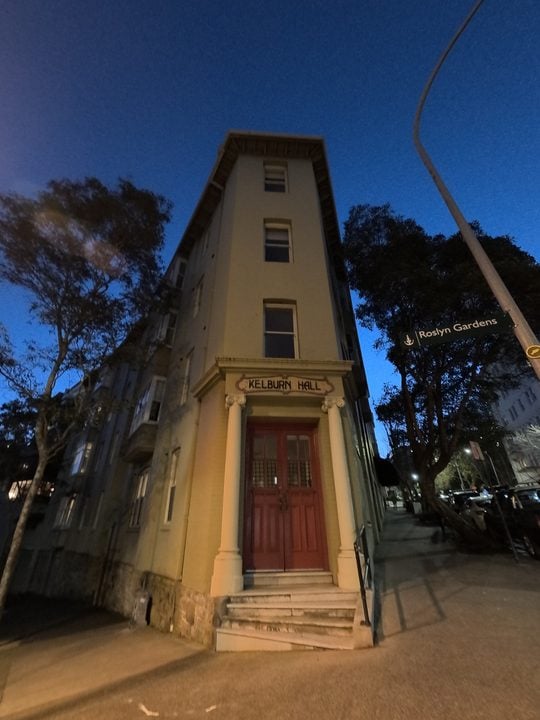
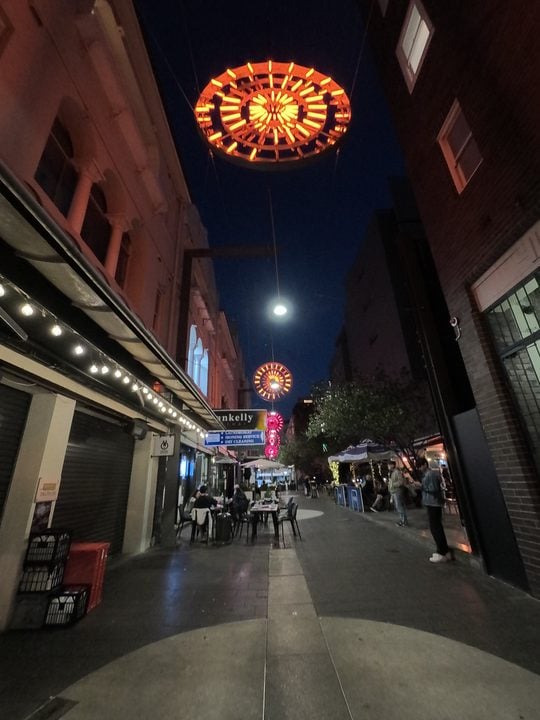
While there was noise visible in the darkest shots and videos, you can scale the noise reduction (the Denoise setting) up or down. For video there is a Low Light mode; however, I didn’t see a huge difference in the final footage when using it, other than the preview being brighter. That’s not to say this camera can see in the dark, because it can’t, but it is certainly a much more usable unit if you need to shoot in low light. Also, when taking stills, you need to be mindful of holding the camera still for a few seconds to allow for its longer exposure.
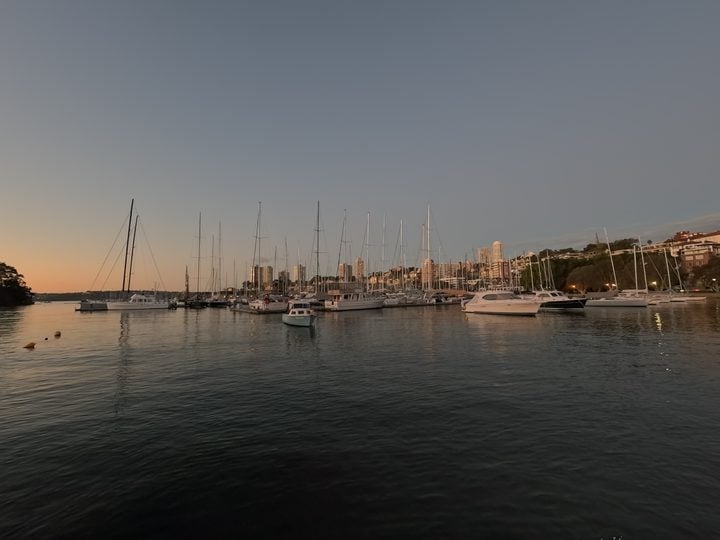
When I was walking around, I tried out the different HyperSmooth stabilisation modes. There are a few, including On, which really crops in on the sensor for maximum stabilisation, and AutoBoost, which only crops in when it needs to. I found that AutoBoost was the most practical. It does a good job of smoothing out the jitters from walking, but it doesn’t completely eliminate the motion, which makes it more realistic. I didn’t notice any dramatic wobbling caused by the stabilisation algorithm either.
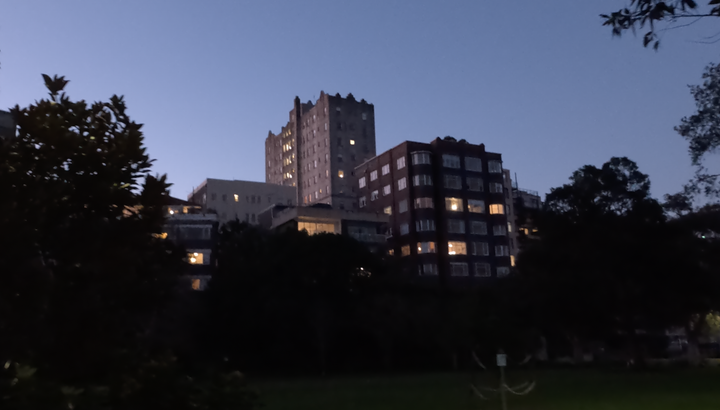

[Update] Since our testing, GoPro has released a free firmware update that rebuilds the Mission 1 series photo experience. It adds Rapid Photo for zero-lag shutter response, Continuous Shutter (hold the shutter for more than 100 photos at 12MP or more than 20 RAW photos at 50MP), a buffer indicator and an updated shutter sound.
Underwater: robot pool cleaner shoot
For our underwater shots, this was just in a swimming pool, and we mounted the Mission 1 Pro on an extension pole. We didn’t use an underwater housing as the pool wasn’t that deep, although the camera does go down to 20 metres without needing one. We followed the robot pool cleaner around while it vacuumed the bottom and sides. The footage was vibrant, colourful, clear and sharp. We also enjoyed listening to the audio captured, which was a surprise, as the underwater noise really complemented the footage.
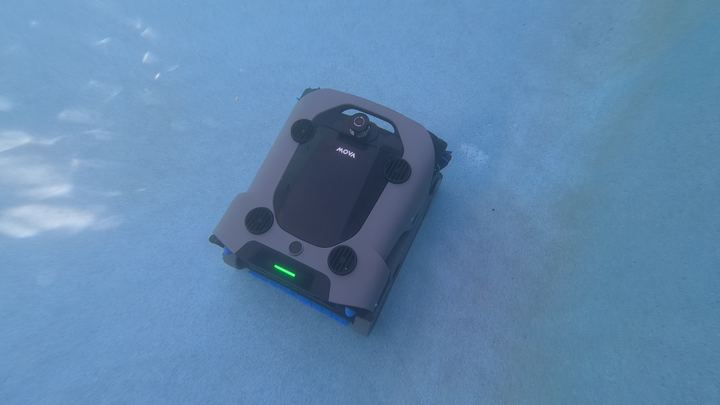
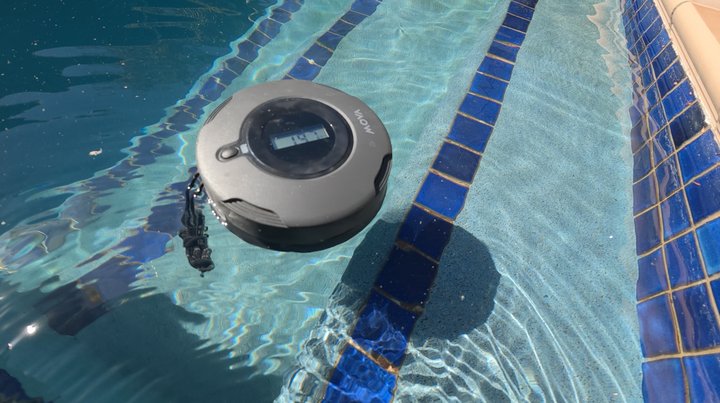
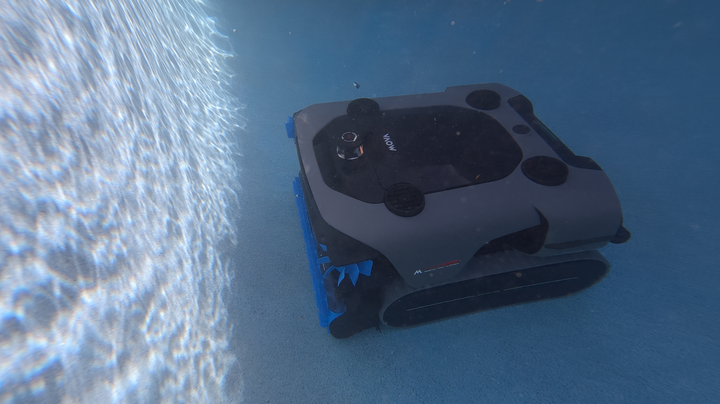
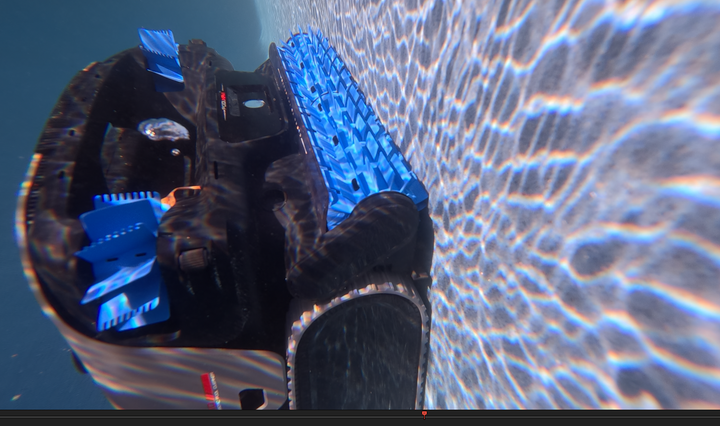
The only challenge we found was that you can’t use Wi-Fi underwater, so we couldn’t monitor the footage from the app or reframe the crop. Instead, we relied on the 2.59-inch rear display, as the 1.4-inch front display was a little too small to see from a distance. It also seemed like the screens always turned off a little too soon. Thankfully, you can tap them to turn them back on, or extend the timeout in the Screen Saver setting.
On the road: electric car shoot
Moving to the car shoot, most of this was done in 4K using the Natural colour profile. We mounted the Mission 1 Pro on a suction cup mount, and the stabilisation did a good job of smoothing out the road bumps. We used the preview on our iPhone with the GoPro Quik app and were able to zoom in to adjust our framing before hitting record; however, once recording, you can’t change the zoom level. The footage was bright and crisp, with nice colours, and we used the Wide digital lens here, which sits between the wider SuperView and the narrower Linear, to take in more of the action.
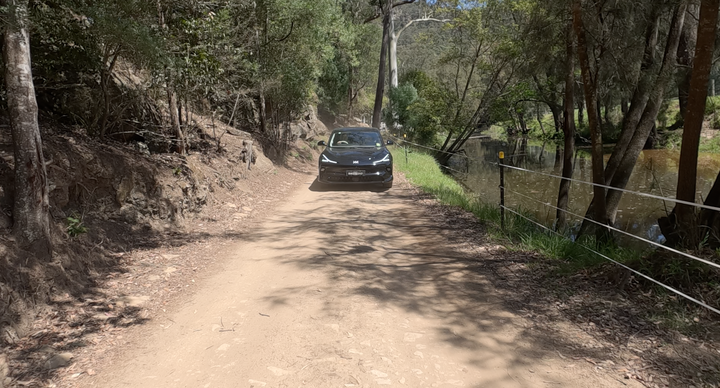
I was quite surprised at the range we were able to get between the phone and the camera. There were times when we were two car lengths away and the preview on the iPhone was still connected.
[Update] GoPro has also updated its Mission Monitor app for iPhone and iPad, adding a histogram, waveform, RGB parade, false colour and wireless connectivity.
Inside the car, we used a combination of artificial and natural lighting on the driver, and the dynamic range of the Mission 1 Pro seemed quite good, retaining detail in the darker areas without blowing out the highlights, which was a common challenge when we were driving around on a sunny day. Stabilisation was also useful here, and the footage was nice and smooth.
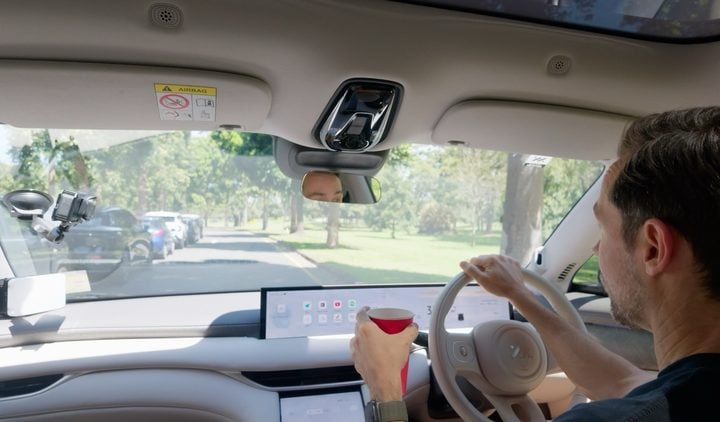
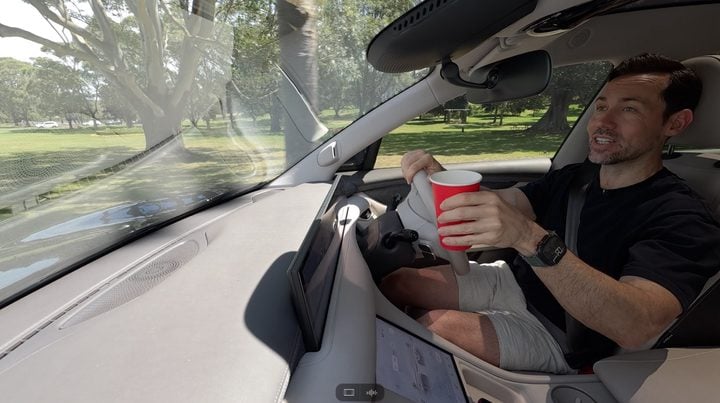
We also used the Horizon Lock feature here (the Linear + Horizon Lock digital lens) to keep everything nice and square. And while we didn’t end up using any footage with it, Subject Tracking is another way to ensure the camera stays locked on the talent, even if they move left or right in the frame, as it digitally moves with them.
The front-facing screen was useful here to help us set up the framing, and we started and stopped recording using GoPro’s voice control, which meant we didn’t have to reach for the camera for each cut.
Image quality and lens
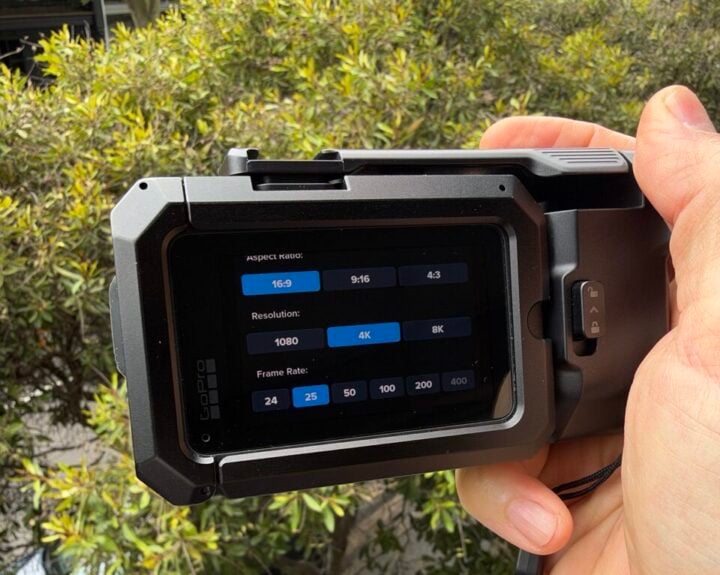
Overall, I was quite impressed with the footage from the Mission 1 Pro. It looks great, and low light is certainly better than any GoPro I’ve used before. The 1-inch sensor plays a big part in this, and the f/2.8 lens is versatile, with a 159-degree field of view to work with. And for really maxing out the resolution, you can shoot in 8K or 8K Open Gate, both of which can produce some stunning footage. The ability to shoot 4K at 240 frames per second is also fantastic for creative effects or slowing down high-energy action shots. If you want to, you can even crank it up to 480 frames per second in Full HD, or a 960 frames per second burst, although I didn’t try these.
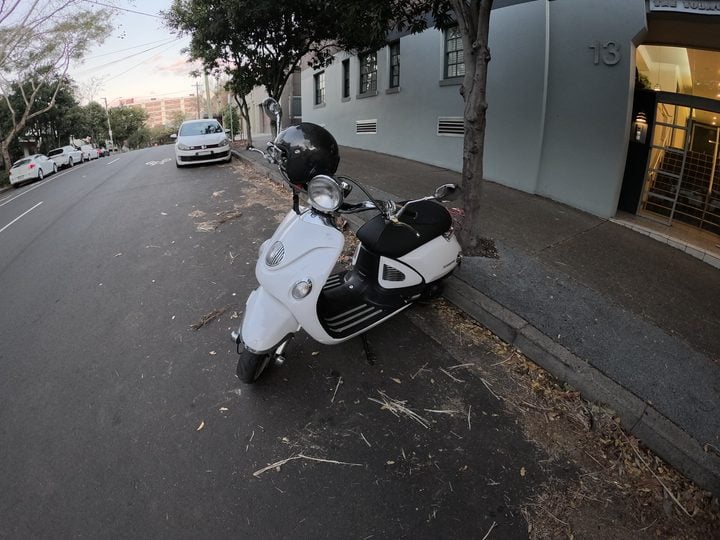
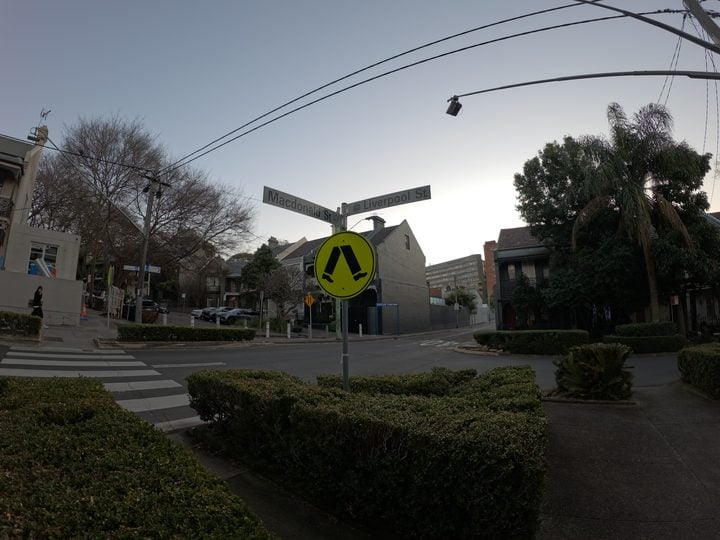
Cutting the GoPro footage into our timelines and matching it with our Canon C80 and DJI Osmo Pocket 4P didn’t create any problems. We tried to shoot in log as much as possible, and DaVinci Resolve is such a powerful grading tool that we could match things up quite easily.
Yes, an action cam does have a signature look with its fisheye-type lens; however, you can choose to shoot with the Linear digital lens, which straightens the lines for a more cinematic look. And the stabilisation tools, including HyperSmooth and 360-degree Horizon Lock, are very handy when you need them.
Audio and mounting
For audio, we used a separate mic and lav system, although you can also use GoPro’s own wireless microphone with the Mission 1 Pro. We only used the audio captured by the camera’s internal mics to sync with our main microphone track. I was, however, impressed to see that the Mission 1 Pro can record 32-bit float audio, which is a lifesaver when it comes to very dynamic audio, as it doesn’t clip.
There are plenty of great accessories, and the Mission 1 Pro uses the same GoPro mounting fingers as its predecessors, so there are lots of options for attaching the camera, including helmets, handlebars, suction cups, sticks, gimbals and much more.
Point-and-Shoot Grip
When walking around, I also used the Point-and-Shoot Grip (A$154.95), so the GoPro felt more like a conventional compact camera. The grip is comfortable to hold, and the shutter button is in a more natural place, although it’s a bit strange when you press it because it isn’t really a button but rather a lever.
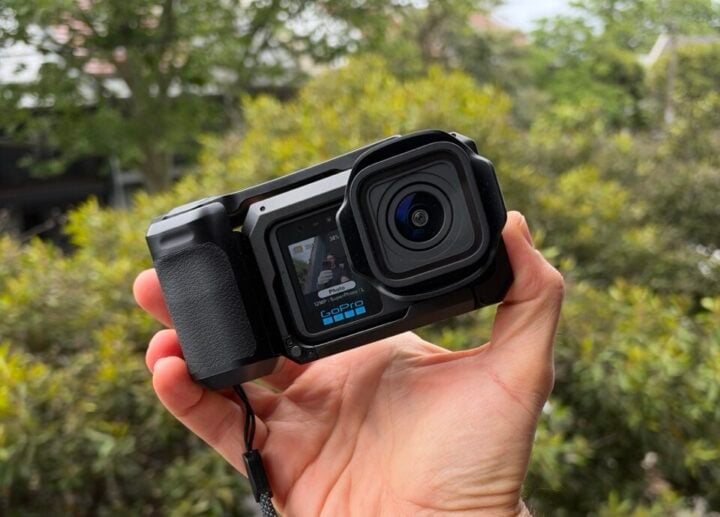
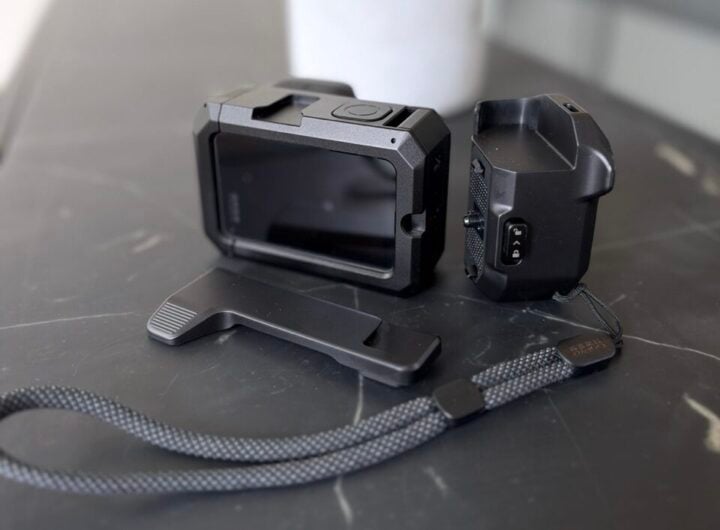
The grip also provides a couple of cold shoe mounts, which can be handy if you want to attach an external mic. You can remove part of the handle to expose a mount for positioning the camera in portrait mode, and there’s also a 1/4-20 thread at the base for attaching to a tripod. The grip can be removed quickly, and you still have access to the USB-C port and memory card without removing it entirely. It also adds a bit of extra protection, just in case.
Battery life, design and everyday use
I was impressed with the Mission 1 Pro’s battery life. We would often get three or four hours of shooting in direct sunlight on 25-degree-plus days. And as our kit came with two batteries, we could easily swap one for the other and charge it up so we could keep shooting.
I think it has a solid design as well, and the screens are quite bright when you are up close to them and easy to operate. The Mission 1 Pro is also quite sturdy, and the metal rig that comes in the box is really strong, so it should be able to be knocked around a fair amount.
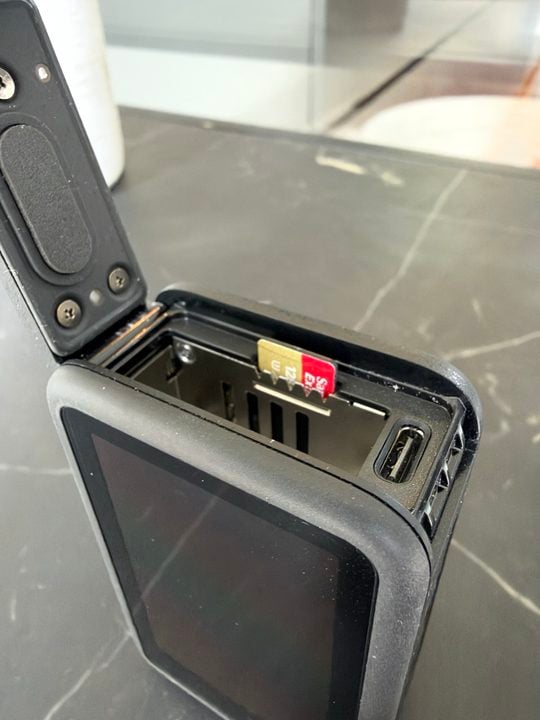
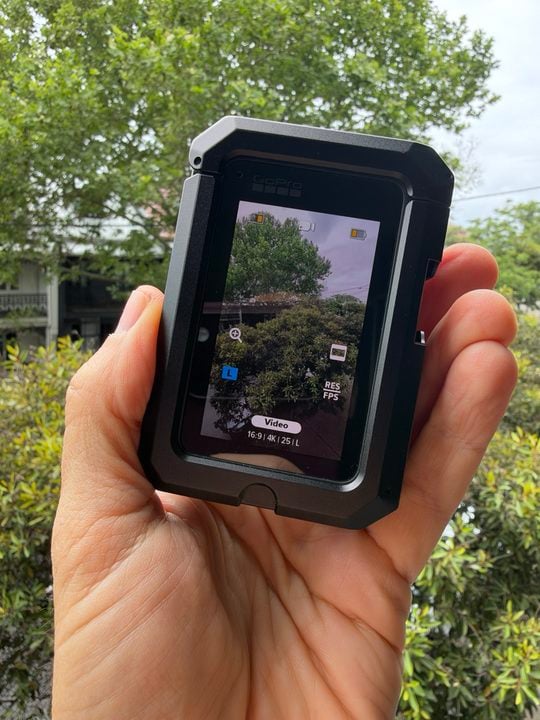
The only frustrations I found were that the microSD card is very difficult to remove, and when I plugged the camera into my Mac with a USB-C cable, it would never enter a media transfer mode. That meant I had to remove the microSD card, put it into an SD card adapter and then into my Mac Studio. Perhaps there’s a setting I didn’t find, but otherwise I should be able to transfer my footage by plugging it into a computer.
Otherwise, the menus can be a little counterintuitive at times, but with a little practice they become easier and quicker to use.
How it compares
Here’s how the Mission 1 Pro stacks up against GoPro’s previous flagship, the HERO13 Black, and DJI’s Osmo Action 6.
| Specification | GoPro Mission 1 Pro | GoPro HERO13 Black | DJI Osmo Action 6 |
|---|---|---|---|
| Sensor | 1-inch | 1/1.9-inch | 1/1.1-inch |
| Aperture | f/2.8 | f/2.5 | f/2.0 to f/4.0 variable |
| Maximum field of view | 159° | 156° | 155° |
| Top video resolution | 8K 60fps, 8K Open Gate 30fps | 5.3K 60fps | 8K 30fps |
| 4K maximum frame rate | 240fps | 120fps | 120fps |
| 1080p slow motion | 480fps (960fps burst) | 240fps | 240fps |
| Log profile | 10-bit GP-Log2 | 10-bit GP-Log | 10-bit D-Log M |
| Maximum bit rate | 240Mbps | 120Mbps | 120Mbps |
| Photo resolution | 50MP | 27MP | 38MP |
| Stabilisation | HyperSmooth, 360° Horizon Lock | HyperSmooth 6.0, Horizon Lock | RockSteady 3.0, HorizonSteady |
| Waterproof (no housing) | 20m | 10m | 20m |
| Rear screen | 2.59-inch touch OLED | 2.27-inch touch | 2.5-inch OLED |
| Front screen | 1.4-inch | 1.4-inch | 1.46-inch |
| Battery | 2150mAh | 1900mAh | 1950mAh |
| Built-in mics | 4, 32-bit float | 3 | 3 |
| Internal storage | None (microSD) | None (microSD) | 64GB plus microSD |
| Weight | 207g | 159g | 149g |
| Price (AUD) | A$1,099.95 | A$649.95 | A$669 (Standard Combo) |
Who is it for?
Overall, I have access to a number of different compact cameras, including an Insta360, the DJI Osmo Pocket 4P and my iPhone 18 Pro Max. For social media videos, I could reach for any of them, and I didn’t think the Mission 1 Pro would add much to the equation. However, after using it, I value its versatility and not having to worry about breaking it (or drowning it), unlike the Pocket 4P’s delicate gimbal, or having to use proprietary software to frame up my shots, as with the Insta360. This means I can get my footage onto the timeline faster, with less work or worry. And the Mission 1 Pro’s 1-inch sensor means I get a great-looking image, with so many modes and very impressive capabilities like 8K, 4K slow motion, Open Gate and 50MP photos.
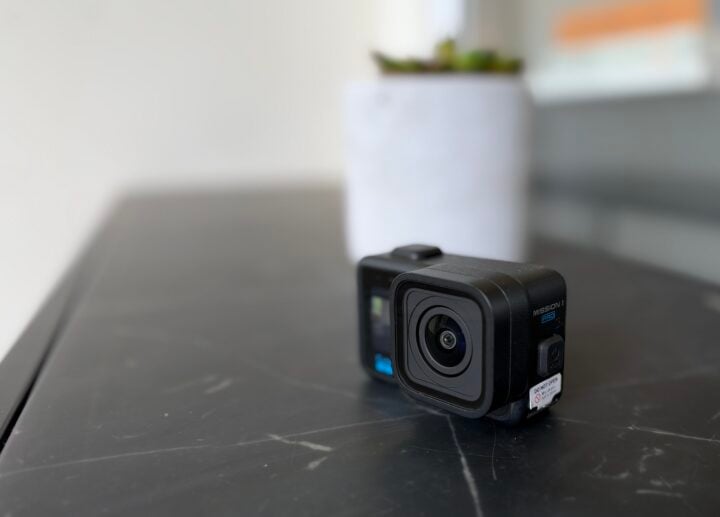
I am also intrigued by the Mission 1 Pro ILS, with its interchangeable Micro Four Thirds lens mount. Having different lens options could really take this camera to the next level, and I see that it’s currently sold out on GoPro’s Australian site.
So will this replace the other cameras in my kit bag? Probably not, as each is specialised for a certain purpose, but the Mission 1 Pro is definitely an all-rounder that can stand by itself, and will of course be perfect for action outings, holidays and even professional shoots.
Frequently asked questions
Yes. The Mission 1 Pro is waterproof to 20m without a housing. The Mission 1 Pro ILS, which takes interchangeable Micro Four Thirds lenses, is weatherproof only and needs a housing underwater.
The Mission 1 Pro is A$1,099.95 from GoPro’s Australian online store. The standard Mission 1 is A$949.95 and the Point-and-Shoot Grip is A$154.95.
Both use a 1-inch sensor and an f/2.8 lens with a 159-degree field of view. The Pro adds 8K at 60fps, 8K Open Gate, 4K at 240fps, 1080p at 480fps and a 960fps Burst Slo-Mo mode.
In our testing it was clearly better than previous GoPros, with more detail and less noise thanks to its 1-inch sensor. Some noise remains in the darkest scenes, and you need to hold the camera steady for night stills.
Yes. It records 10-bit GP-Log2 footage, which we found easy to grade and match with cinema cameras in DaVinci Resolve.
GoPro quotes up to 1.5 hours of 8K30 recording and more than three hours at 4K30. In our testing we often got three to four hours of shooting on hot, sunny days.
The post GoPro Mission 1 Pro review: Is GoPro’s 1-inch 8K camera worth it? appeared first on GadgetGuy.
0 (mga) komento:
Mag-post ng isang Komento