


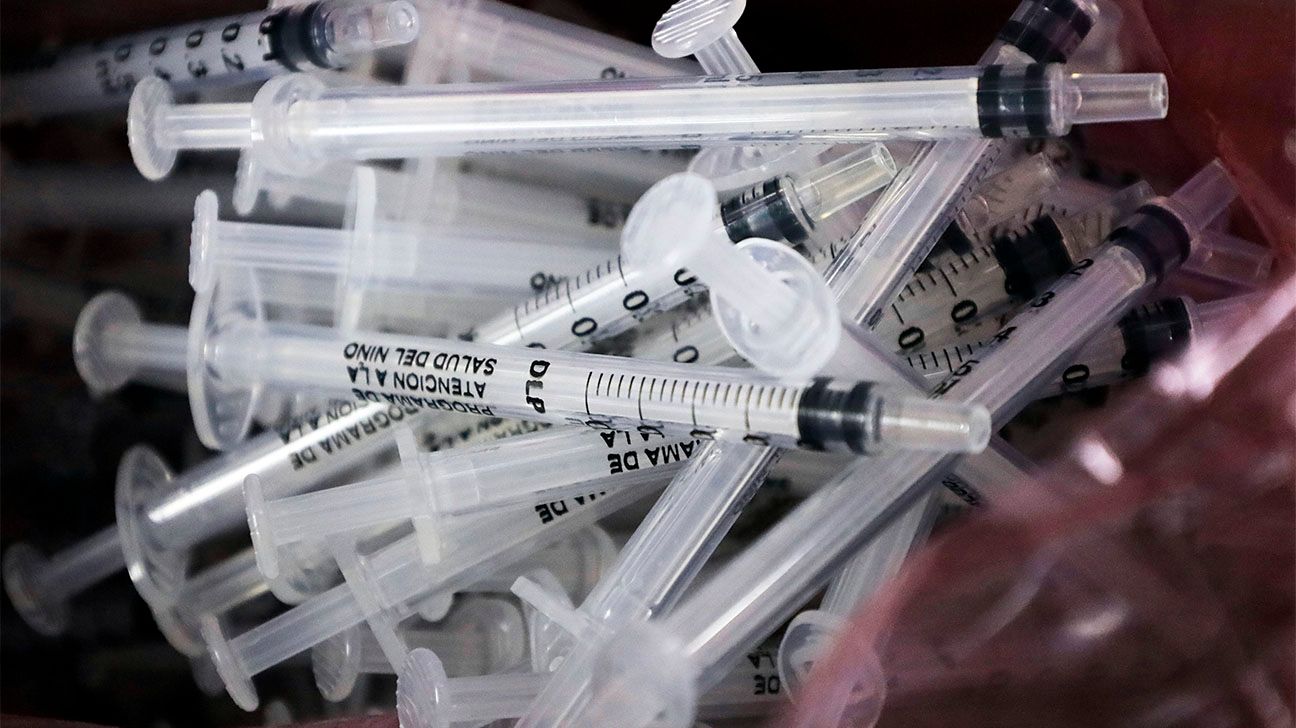
- The Food and Drug Administration (FDA) has blocked the publication of COVID-19 and shingles vaccine safety studies, citing concerns over their conclusions.
- Experts question the decision to withdraw the studies, since both vaccines have substantial evidence supporting their safety and effectiveness.
- Some experts say the decision may be influenced by HHS Health Secretary Robert F. Kennedy Jr.’s anti-vaccine agenda.
The Food and Drug Administration (FDA) has pulled back the publication of several studies on the safety and efficacy of broadly used COVID-19 and shingles vaccines.
The Department of Health and Human Services (HHS), which oversees the FDA, confirmed the decision, which was first reported by The New York Times.
The studies, which involved millions of patient records and taxpayer dollars, were conducted by FDA scientists and data contractors before they were blocked from publication.
Two studies on COVID-19 vaccines that were accepted by medical journals were withdrawn in October 2025 before they were published.
The FDA also failed to sign off on two safety studies on the shingles vaccine, Shingrex, which required the federal agency’s approval prior to their submission to a drug safety conference.
The Department of Health and Human Services couldn’t be reached for comment, but an HHS spokesperson told The New York Times that the studies were blocked due to concerns about their conclusions.
“Scientists and physicians aren’t buying that explanation,” said Robert Glatter, MD, attending physician in the Department of Emergency Medicine at Lenox Hill Hospital in New York City, and assistant professor of Emergency Medicine at Zucker School of Medicine at Hofstra/ Northwell.
“The public health implications of blocking such studies are serious … secrecy can backfire. People who are already distrustful may see suppression where officials see caution,” Glatter told Healthline.
A robust body of evidence supports the safety and effectiveness of both COVID-19 and shingles vaccines, which has experts concerned about the FDA’s decision to pull the recent studies.
Monica Gandhi, MD, MPH, a professor of medicine at the University of California, San Francisco, echoed these remarks. “The COVID-19 vaccine safety studies had been peer reviewed and would have been extremely important to be published for reassurance of the public of the safety of these vaccines,” she said.
William Schaffner, MD, professor of preventive medicine and infectious diseases in the Department of Health Policy at Vanderbilt University Medical Center in Nashville, agreed.
“Both vaccines are in widespread use, not only here in the United States, but around the world. Having these data available so that professional people can look at them and make their own assessments when they see the data is very important.”
We spoke with infectious disease experts unaffiliated with the studies to find out why scientific research might be barred from publication, and why it’s potentially problematic to block it from public view.
These interviews have been lightly edited and condensed for clarity and length. The opinions expressed in this article do not necessarily reflect the views of Healthline Media.
Why is the FDA’s decision to pull the publication of two studies a concern?
Gandhi: I am extremely concerned about the FDA’s decision to pull publications of well-conducted studies documenting the safety of COVID-19 vaccines among older adults and people 6-64 years old, as well as a study showing the effectiveness of the Shingrix vaccine in preventing shingles.
The COVID-19 safety studies reviewed side effects of these vaccines among millions of people with data collected by FDA scientists from Medicare and other insurance databases, and found the vaccine to be safe among those who are 65 and older and those between the ages of 6 to 64 years.
The FDA’s decision suggests a political rather than a scientific motivation and aligns with the anti-vaccine views of the Secretary of the Department of Health and Human Services, Robert F. Kennedy Jr.
Glatter: The broad reaction from my colleagues and myself is skepticism and outrage toward the decision itself, not because every study is beyond criticism, but more to the point that withholding research is viewed as unethical and irresponsible.
In science, disagreement is normally handled through peer review, editorial commentary, replication, and publication of rebuttals, not by stopping publication of a research paper altogether.
That is especially true for vaccines, where confidence depends on showing the public both the evidence and the process.
Federal health agencies themselves routinely argue that transparency is essential to trust, and the FDA has recently emphasized the importance of making trial results public to avoid distorted perceptions of safety and efficacy.
What concerns might warrant blocking the publication of studies like these?
Gandhi: There are no concerns that I could see which would block these COVID-19 vaccine safety publications given that the design of looking at large datasets of people who receive the vaccine before and after vaccine receipt is a sound one and can be accomplished in millions of people using large insurance-based databases.
FDA scientists conduct such studies after a new vaccine is approved, and these studies are peer reviewed and nearing publication. Their blockage suggests a political, rather than a scientific, motivation.
Schaffner: We should realize that no single study or method is perfect; it’s the assemblage of many different studies done by different investigators using methods that are sometimes slightly different, but that nonetheless have a long track record of reliability. That’s how we come to a consensus on effectiveness and safety.
The studies in question were done by highly experienced investigators using well-established methods. Are they the single and only and perfect answer, no, but they do reflect a real-life experience that goes beyond the constrained experience you get from prospective, controlled clinical trials.
The methods used by these investigators are well established and well recognized. They cannot be published unless they are peer-reviewed first, so they undergo careful critical analysis before publication.
Glatter: Could there ever be legitimate reasons to delay publication of a government-funded study? In principle, yes. Methodological flaws or errors, premature conclusions, or conflicts with stronger evidence are valid grounds for internal review.
But such conversations should happen in the open. Scientists revise, resubmit, respond to peer critique and review. What allegedly happened here — leadership halting accepted research without transparent scientific justification — falls well outside normal regulatory conduct.
What are the public health implications of blocking studies about vaccine effectiveness?
Gandhi: The public health implications are to erode trust in vaccines such as those used for COVID-19 and shingles prevention. The public can be reassured by large database-based studies such as these on the safety and effectiveness of vaccines.
Schaffner: Over the last several years, there’s been a great deal of controversy and concern about the effectiveness and the safety of vaccines. Having data from very large real-life experiences assembled, analyzed, and then published is very important.
That information goes out to medical care practitioners of all kinds — physicians, nurses, pharmacists — so that they can honestly and clearly represent the effectiveness and safety of vaccines to their patients.
Not having this information readily available and published in the scientific literature is, therefore, very unfortunate, as it impedes the appreciation of the safety and effectiveness of the vaccines now being recommended for use.
Glatter: Critically, COVID vaccines are among the most studied in history, with large clinical trials and post-market surveillance consistently showing clear and substantial population benefits that outweigh any noted rare risks.
Blocking confirmatory safety data doesn’t strengthen the science — it simply removes it from view. The public health stakes are real. Vaccine confidence is not a fixed quantity; it erodes incrementally, and it erodes fastest when people sense that information is being managed rather than shared.
Under HHS Secretary Robert F. Kennedy Jr., federal agencies have already softened COVID vaccine recommendations, cut vaccine research funding, and attempted to overhaul the childhood immunization schedule. Each of these steps, individually, might be debated on policy grounds.
Together, and now compounded by the suppression of internally favorable safety data, they form a pattern that the public is right to scrutinize.
Do you hope the FDA will reverse its decision and publish the studies?
Schaffner: I hope these studies are published as quickly as possible, because the information is important. They both reinforce the effectiveness and the safety of one of the COVID vaccines and also the shingles vaccine.
Gandhi: I very much hope the FDA will reverse its decision and publish the studies. This matters deeply to public perception that the agency is upholding its formerly high standard of scientific integrity and is not compromised by the HHS Secretary’s ideological views.
Glatter: The bottom line is that these studies should be published. Not because we need more evidence that COVID and shingles vaccines are safe (we already have it), but because the act of suppression is itself the problem. Science earns public trust through transparency, including the willingness to publish findings that challenge assumptions.
When the government funds research and then buries its own reassuring conclusions, it doesn’t protect scientific integrity — it damages it. And in a moment when vaccine hesitancy is already elevated, that damage doesn’t stay within the walls of a federal agency. It spreads like wildfire in 2026, amplified by social media and influencers.
The FDA should reverse course, release these findings through normal peer review, and let the data speak for itself. That is, after all, what the data was intended to do.
FDA Blocks Publication of Vaccine Safety Studies. Why Experts Are Concerned
Source: Pinoy Lang Sakalam
0 (mga) komento:
Mag-post ng isang Komento